No. Pipe Freeze PRO is not designed for use in outdoor conditions.
The cable can be exposed to wetness but the thermostat must stay dry to function properly. Use Pipe Freeze PRO for pipe freeze prevention applications only.


The cable can be exposed to wetness but the thermostat must stay dry to function properly. Use Pipe Freeze PRO for pipe freeze prevention applications only.
As the manufacturer we do not recommend using exension cords but we recognize that many customers do it. If you must use an extension cord, then buy the shortest cord necessary to do the job and make sure it is a 12 gauge thickness.
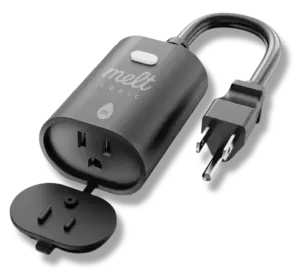
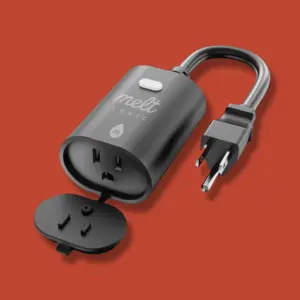
Self-Regulating Heat Tape will draw variable Power depending on the ambient temperature. It draws more power when temperatures are cold and less power when temperatures are warmer. However when the self-regulating cable is plugged in, it is always working, even if only slightly drawing power in warm temperatures. Adding the temperature-controlled switch like ThermaCord to plug-in heat tape or a Thermostatic Controller with Sensor to field assembled cable, will cut the supply of power to your Heat tape when it is not needed.
This will save you energy Costs.
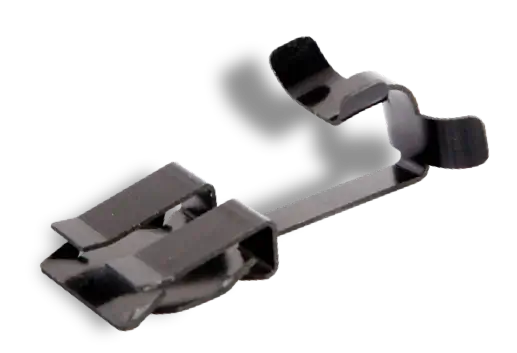
Installing our heat tape on your standing seam roof can be very effective in combating ice dam formation. There’s two main products used to install heat tape on your standing seam metal roof: The S-5 SR Heat Tape Clip, and the standard ice dam heat tape clip.
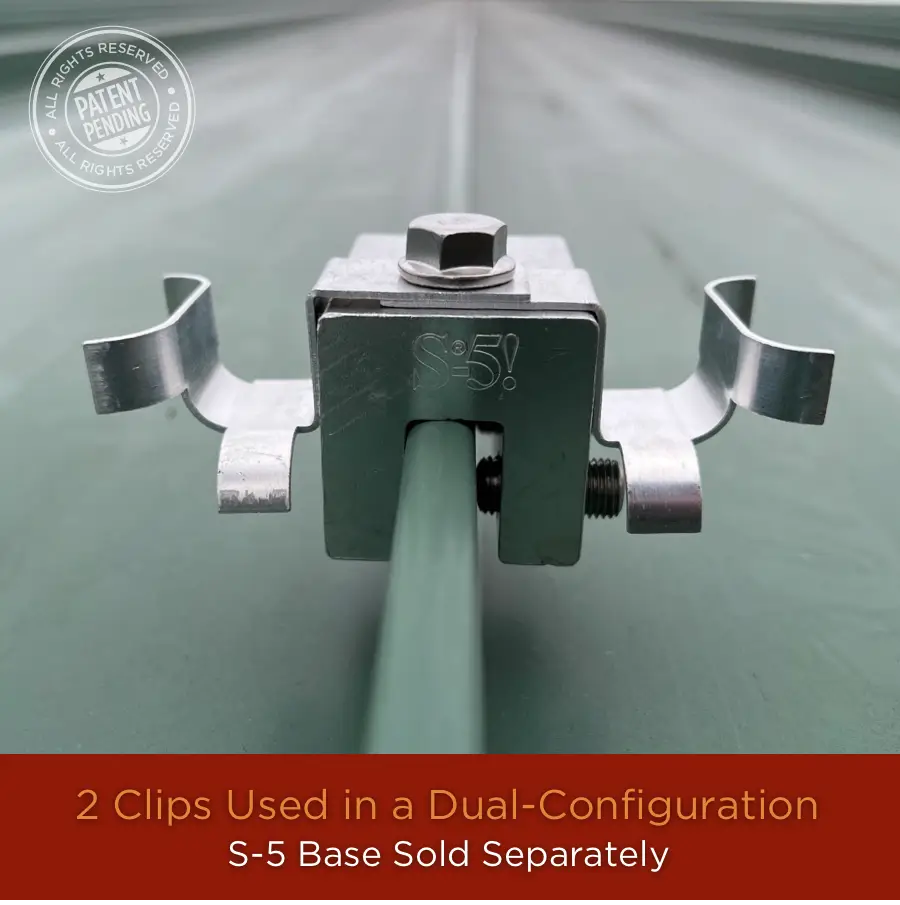
Installing Heat Tape on a Standing Seam Roof with the S-5 SR Heat Tape Clip
The S-5 Heat Tape Roof Clip is a new, patented roof clip design specifically for standing seam applications with a focus on ease of install and effectiveness. It is used in conjunction with the S-5 Base, which needs to be purchased separately. The S-5 base is designed to clamp onto the seam of a metal roof as the S-5 Clip holds your ice dam heat tape into position. Can be set up in a single or dual-clip configuration. (See product page for more info)
Installing Heat Tape on a Standing Seam Roof with Standard Roof Clips
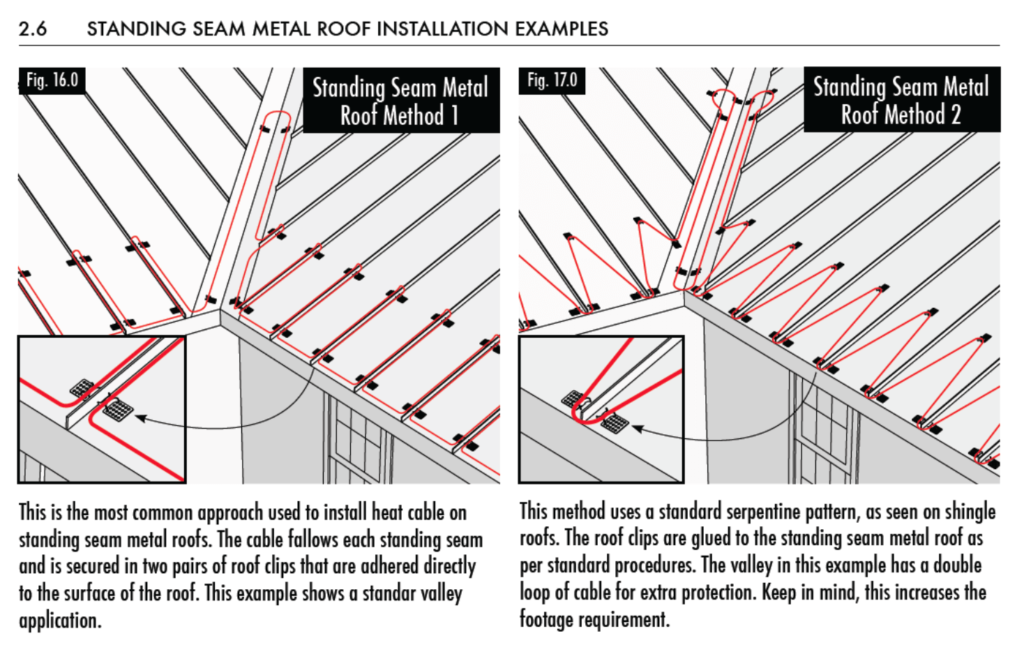
There are specific ways/configurations used when installing heat tape on a standing seam / metal roof using standard heat tape clips. The following (2.6 – figure 16.0 & 17.0) shows a snippet of the HeatTape Pro installation manual showing two different clip configurations, more info can be found in the manual itself: Heat Tape Pro installation Manual
Including a thermostatic heat tape switch or controller in your installation will cut power to your heat tape in times it is not needed. This will lessen your environmental footprint and save you money.
Savings will always depend on the weather and how often you have temperatures above the threshold that the switch turns on your heat cable. In most situations where heat cable is needed, savings will offset the cost of the ThermaCord and then some.
Heat Tape Pro & Piper Freeze Pro can both overlap and/or touch itself in your installation.
It’s fine to overlap your heat tape pro, or have it touching itself in your install. The cable only itself heats up to less than 100ºF at most. This is plenty of warmth to stop ice dams from forming, but isn’t that much warmer than the temperature of your body. Sometimes it won’t even feel that warm to the touch.
This is different than a lot of heat tape that can be purchased at stores: contestant wattage cable can get much hotter and can even be dangerous if you overlap them. Not our cable, however.
Pipe Freeze Pro can touch itself, overlap with itself, or be wrapped around itself on the pipe. It won’t get too hot because not only is it designed to have a maximum output temperature that is less than 100ºF, it is self-regulating –so it’s output adjusts to the ambient temperature near the cable.
The terms heat cable, heat tape and heat trace are all used interchangeably to described heated cables used to protect pipes from freezing, preventing roof and gutter ice dams from forming and for safeguarding temperature sensitive components.
Other terms we’ve seen used regarding Heat Tape are:
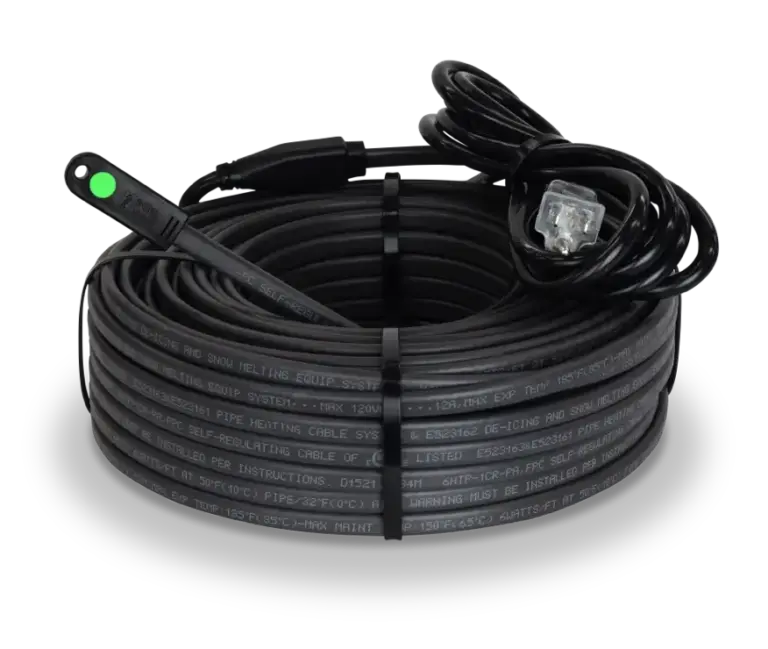
Heat Tape Pro and Pipe Freeze Pro are offered in many lengths from 6-foot up to 150-foot. These products are not designed to be modified, so you should pick the length you need and work with that length. These cables should not be altered and doing so would void any warranty on the product.
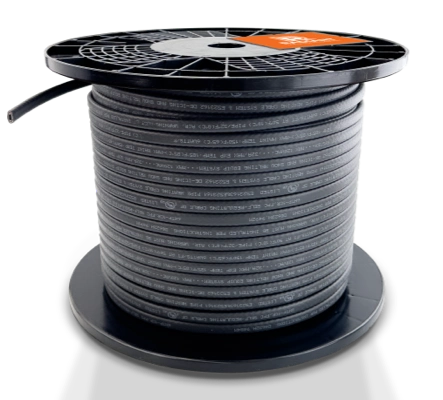
We offer heat tape on spools from 250-foot to 1000-foot. These spools are designed to be cut to length, made into multiple cables, etc. Heat Tape on spools needs to be hard-wired into a junction box, or have a power connection plug-in manually added to it for use. It also requires ends to be properly sealed and terminated. When working with Heat Tape on spools, a Licensed Electrician should be utilized to assure proper wiring per regional codes and standards.