

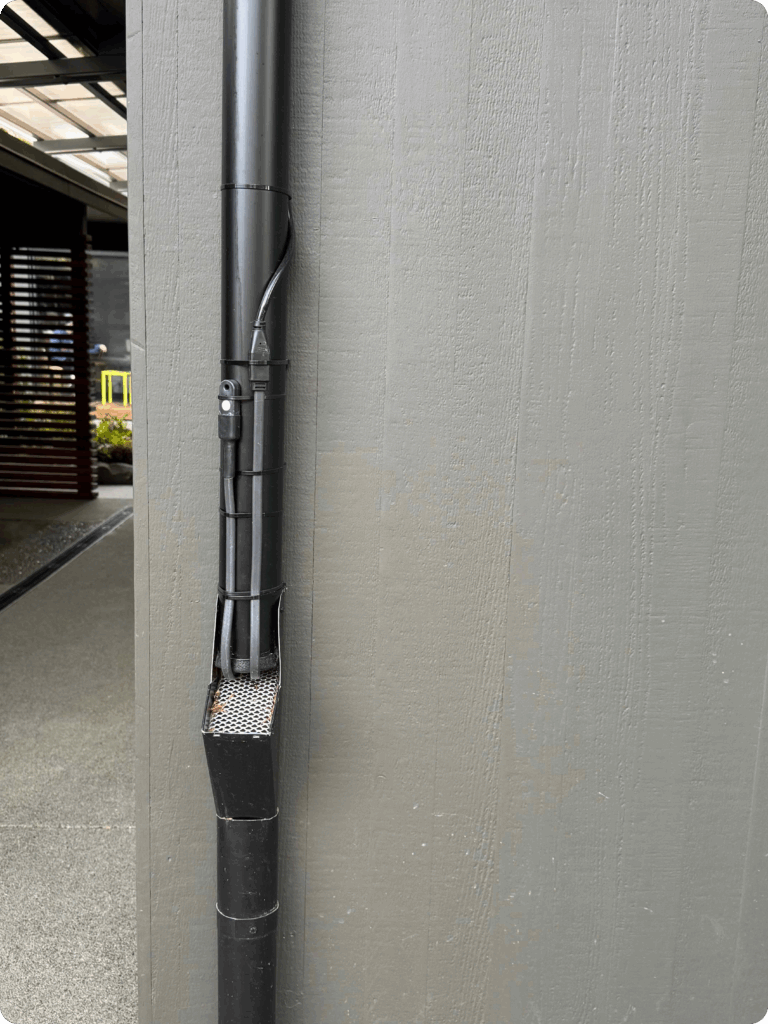
Frozen gutters and downspouts can be a hidden cause of winter leaks, both near the roof and around your foundation. When water can’t exit your gutters it can back up into the eaves and get into your walls. Another problem related to ice in your gutters is that if the gutters are not flowing properly water will end up near your foundation which can cause leaks into your basement. Running heat tape through the gutters and downspouts ensures meltwater flows freely.
Ice in gutters and downspouts is more than a nuisance. It is often the missing link between snow on the roof and water showing up where it does not belong. When gutters or downspouts freeze solid, meltwater has nowhere to go. That water backs up inside the gutter system, spills over the edge, or pools at the eaves where it can work its way behind fascia, into soffits, and down interior wall cavities. In many homes, frozen downspouts also dump water directly next to the foundation, increasing the risk of basement leaks once a thaw begins.
Heat tape is one of the most effective ways to keep gutters and downspouts flowing during winter. When installed correctly, it creates a reliable drainage path that allows meltwater from the roof to exit the system instead of refreezing inside it. This is especially important during freeze thaw cycles, when snow melts during the day and refreezes overnight. Without heat tape, that daily cycle slowly builds solid ice plugs inside the gutter and downspout.
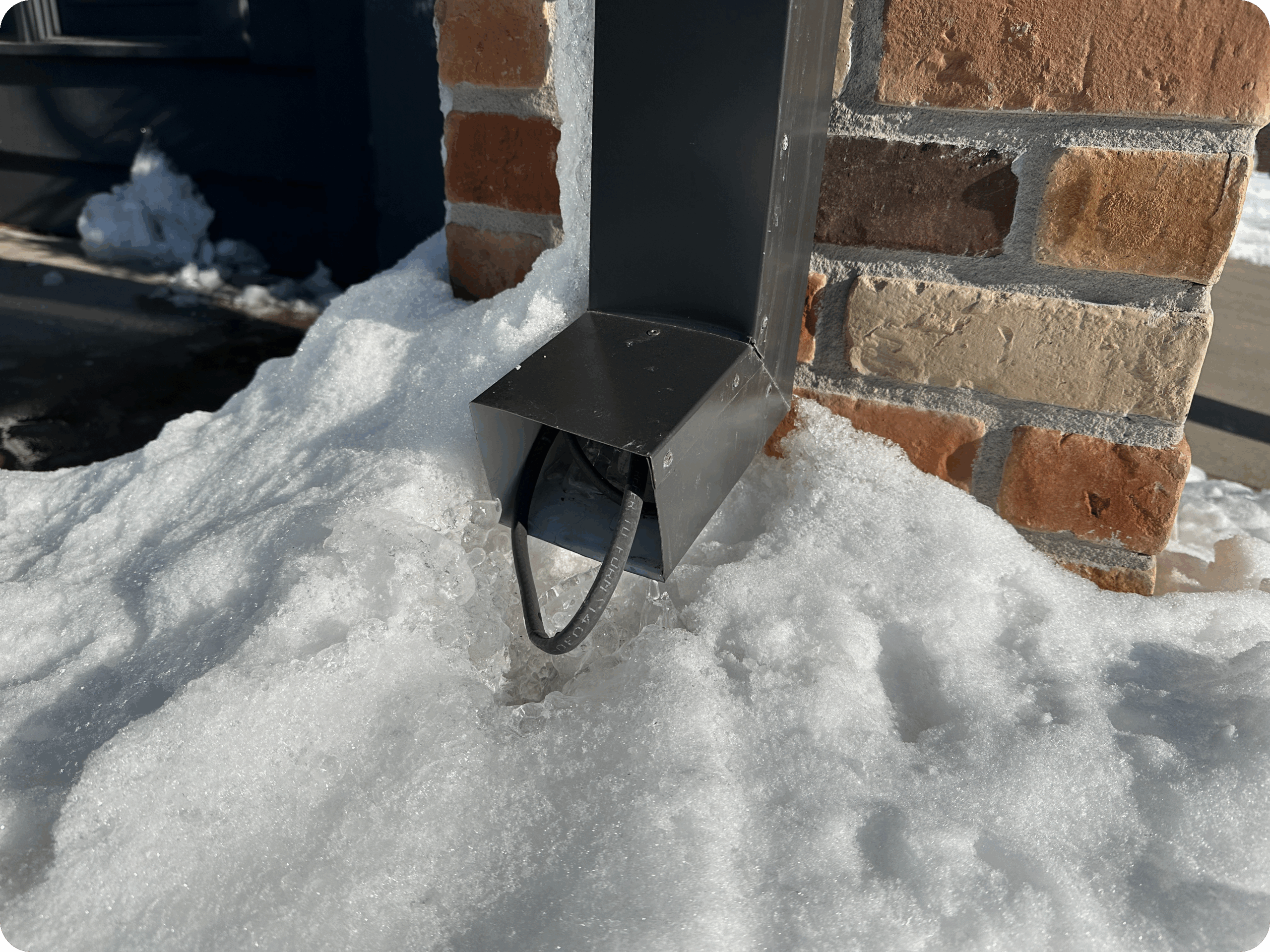
Downspouts deserve special attention because they are often the first place a system fails. A frozen downspout turns the entire gutter into a dead end. Even a small amount of meltwater can quickly back up once the outlet is blocked. Running heat tape down the full length of the downspout keeps that outlet open and allows water to move away from the roof and the foundation where it belongs.
It is also important to understand what heat tape in gutters can and cannot do. Heat tape in gutters and downspouts is excellent at preventing frozen drainage and foundation related water problems. It does not, by itself, prevent ice dams on the roof. Ice dams are a roof phenomenon that originate above the exterior wall line. If you are experiencing roof leaks from ice dams, heat cable will need to be installed on the roof as well. If your problem is limited to frozen gutters, overflowing water, or ice filled downspouts, gutter and downspout heat tape alone is often all that is required.
When used as part of a properly designed system, heat tape in gutters and downspouts provides a simple but critical function. It keeps water moving. That single outcome prevents a long list of winter headaches, from stained siding and rotted trim to foundation leaks and basement water issues.
Gutters freeze in winter for a simple reason. They’re a cold, uninsulated metal trough hanging off the edge of your house with no heat source of their own.
Snow on your roof melts for two reasons. Either heat is escaping from inside the house and warming portions of the roof from below, or the sun is warming the roof surface from above. Sometimes it is both. In either case, that meltwater runs downhill until it reaches the coldest part of the system, the gutter and downspout.
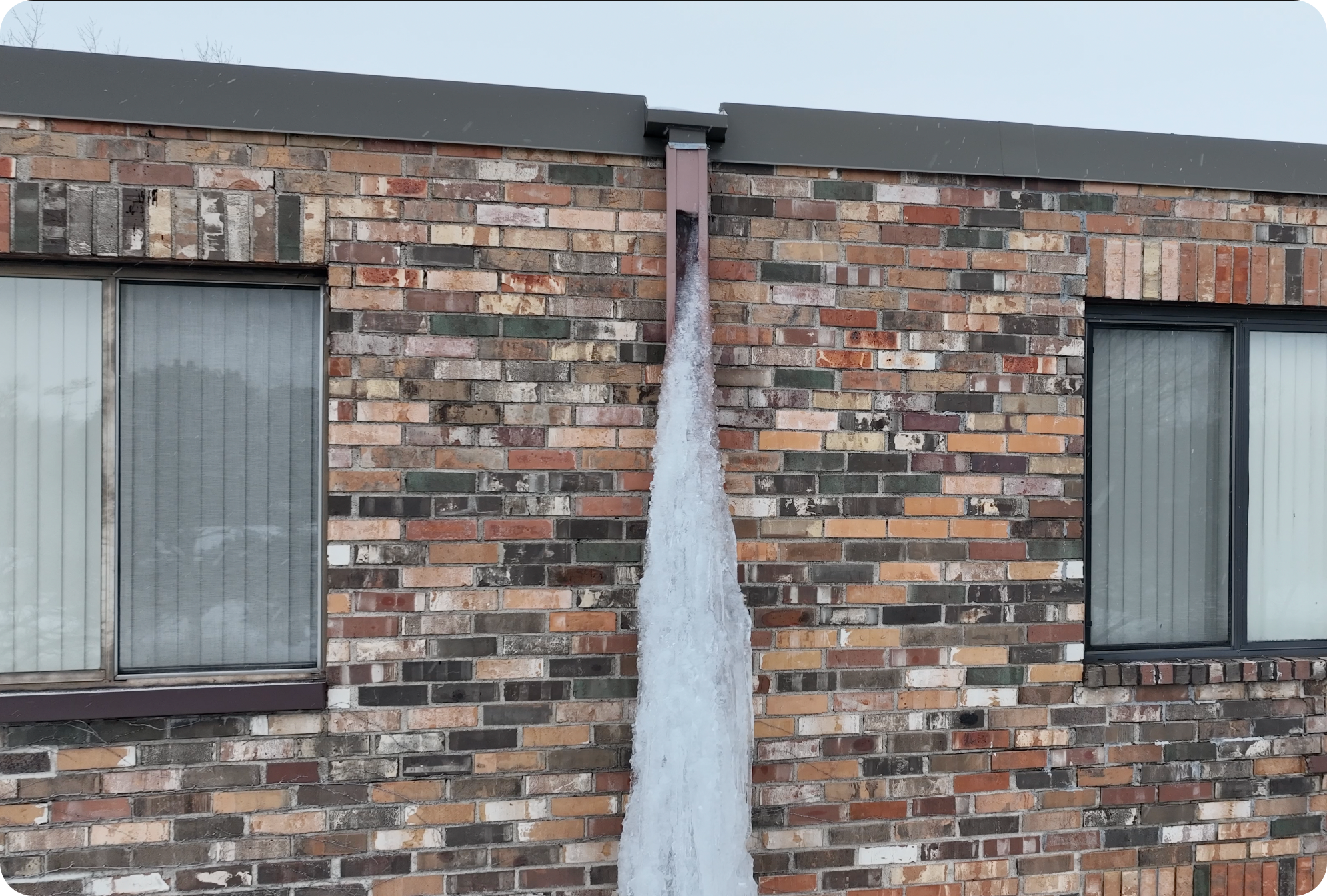
Once the water hits the gutter, it loses heat fast and refreezes. Over time this cycle repeats. Melt, flow, refreeze. The result is a growing mass of ice inside the gutter and downspout. Eventually the downspout plugs solid, the gutter fills with ice, and water has nowhere to go.
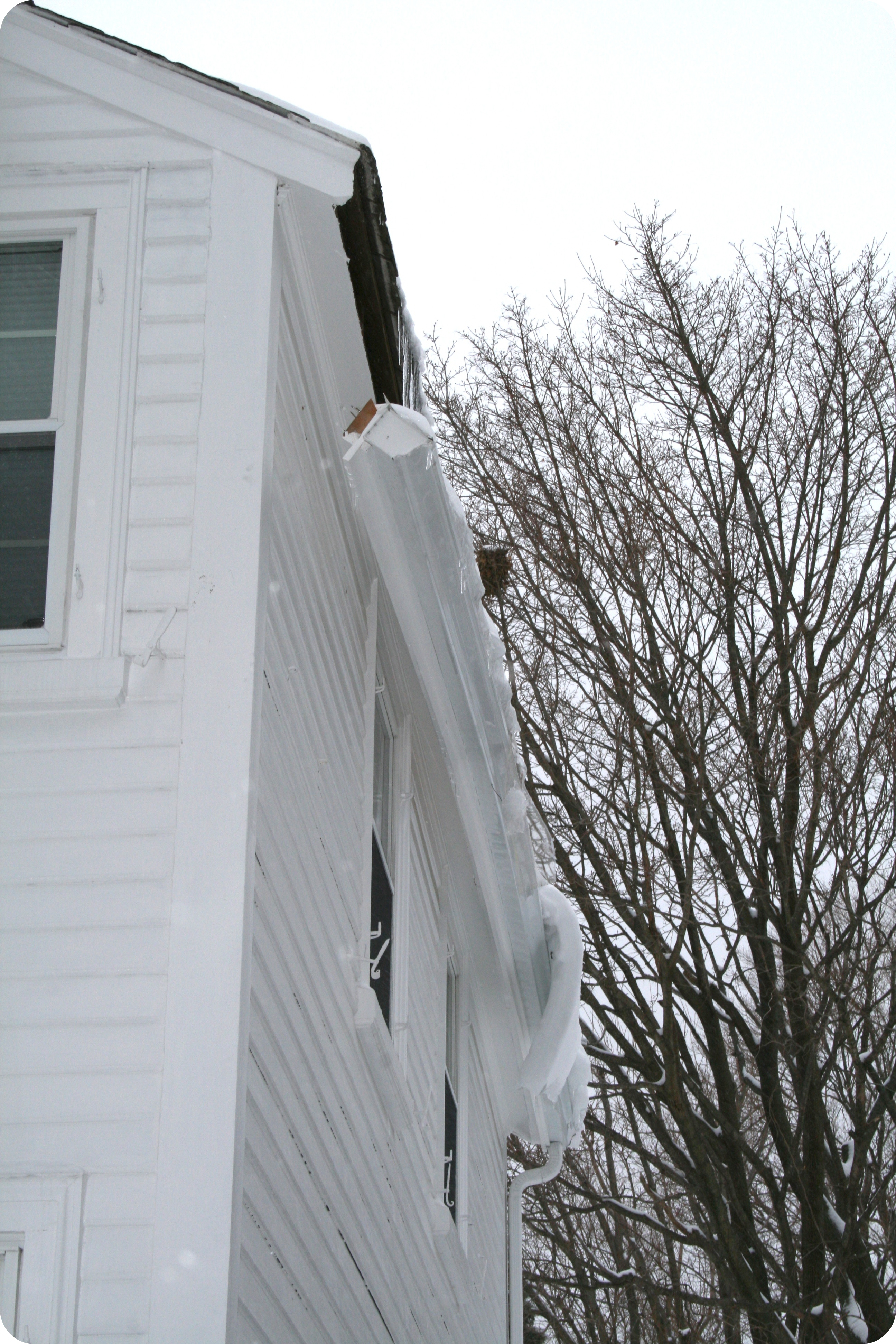
When that happens, a few predictable problems show up. Water backs up toward the roof edge and eaves. Gutters start to sag or pull loose under the weight of the ice. Meltwater spills over the edge and dumps next to the foundation. None of this requires an ice dam on the roof to be a problem. Frozen gutters alone can create real damage.
The key thing to understand is that gutter ice is not caused by clogged gutters, dirty gutters, or bad gutters. It is caused by normal meltwater entering a system that is cold enough to refreeze it. Once you understand that, the solution becomes obvious. If you want water to keep moving, you need to add controlled heat to the places where freezing occurs.
Yes. Ice can absolutely damage gutters and downspouts and it happens all the time.
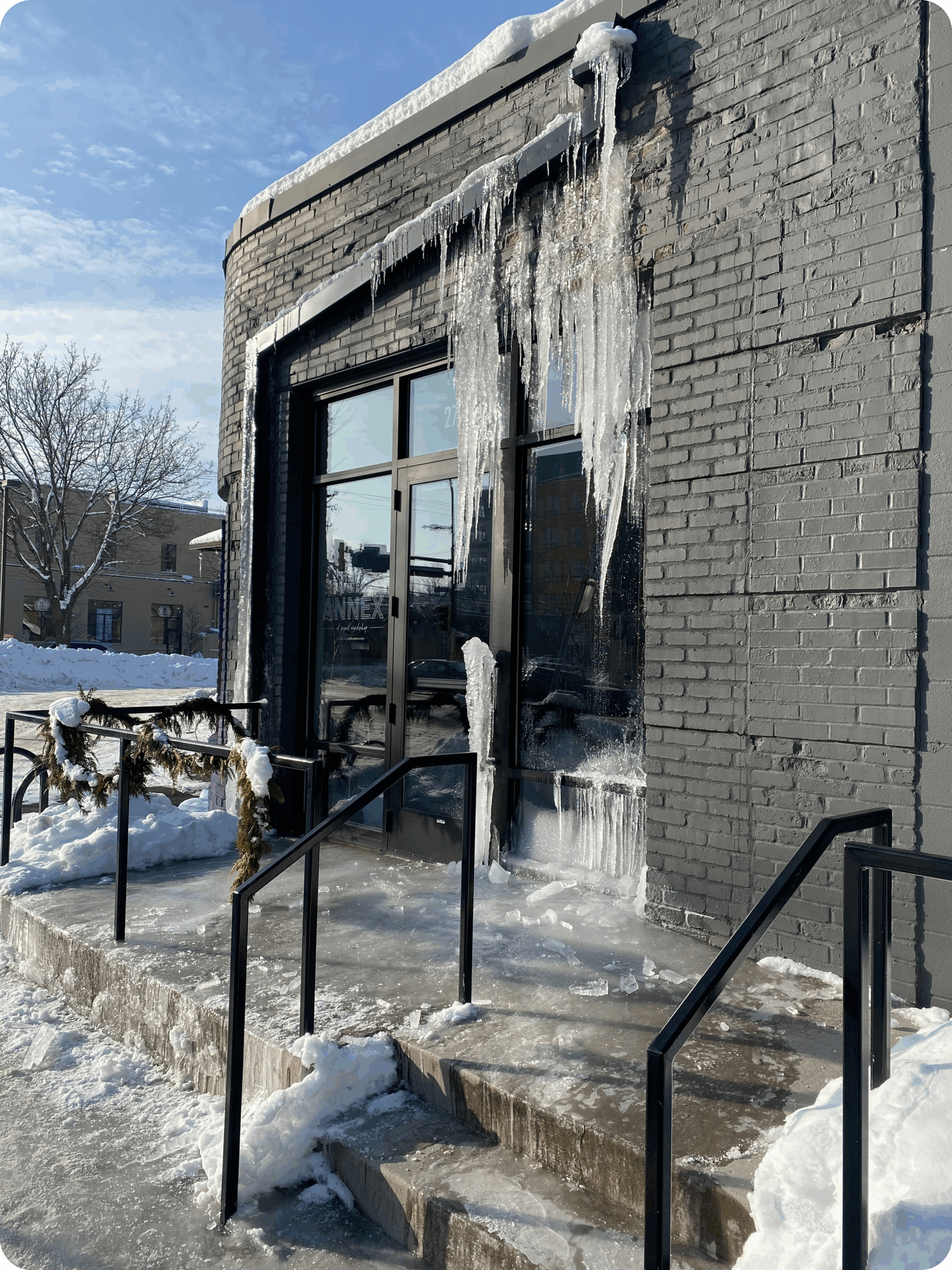
Ice is heavy. A single cubic foot weighs close to sixty pounds and gutters are very good at quietly collecting a lot more than that. Once ice starts building inside a gutter and downspout, the weight adds up fast. Most residential gutter systems, whether aluminum, steel, or copper, were never designed to support hundreds of pounds of frozen load hanging off the edge of a roof.
Horizontal gutter sections are usually the first to suffer. As ice fills the trough, the fasteners and hangers are put into constant tension. Gutters begin to sag, pull away from the fascia, or tear loose entirely. Once that happens, water no longer drains where it should and the system often needs to be replaced rather than repaired.
Downspouts are also vulnerable. Ice inside a downspout expands as it freezes, placing outward pressure on seams and fasteners. That pressure can split the downspout, shear fasteners, or rip the entire assembly off the side of the house. When a downspout fails under load, it can fall unexpectedly, creating a real safety risk for people below and damage to siding, windows, landscaping, or walkways.
There is also a secondary problem many homeowners overlook. When gutters and downspouts are frozen solid, meltwater spills over the edge and dumps directly next to the foundation. Over time this can contribute to basement leaks, frost heave, cracked concrete, and saturated soils around the home.
The takeaway is simple. Ice does not need to be dramatic to be destructive. Even modest buildup can overstress gutter systems over the course of a winter. Keeping gutters and downspouts open and flowing is not just about convenience. It is about protecting the roof edge, the exterior of the home, and the structure below it.
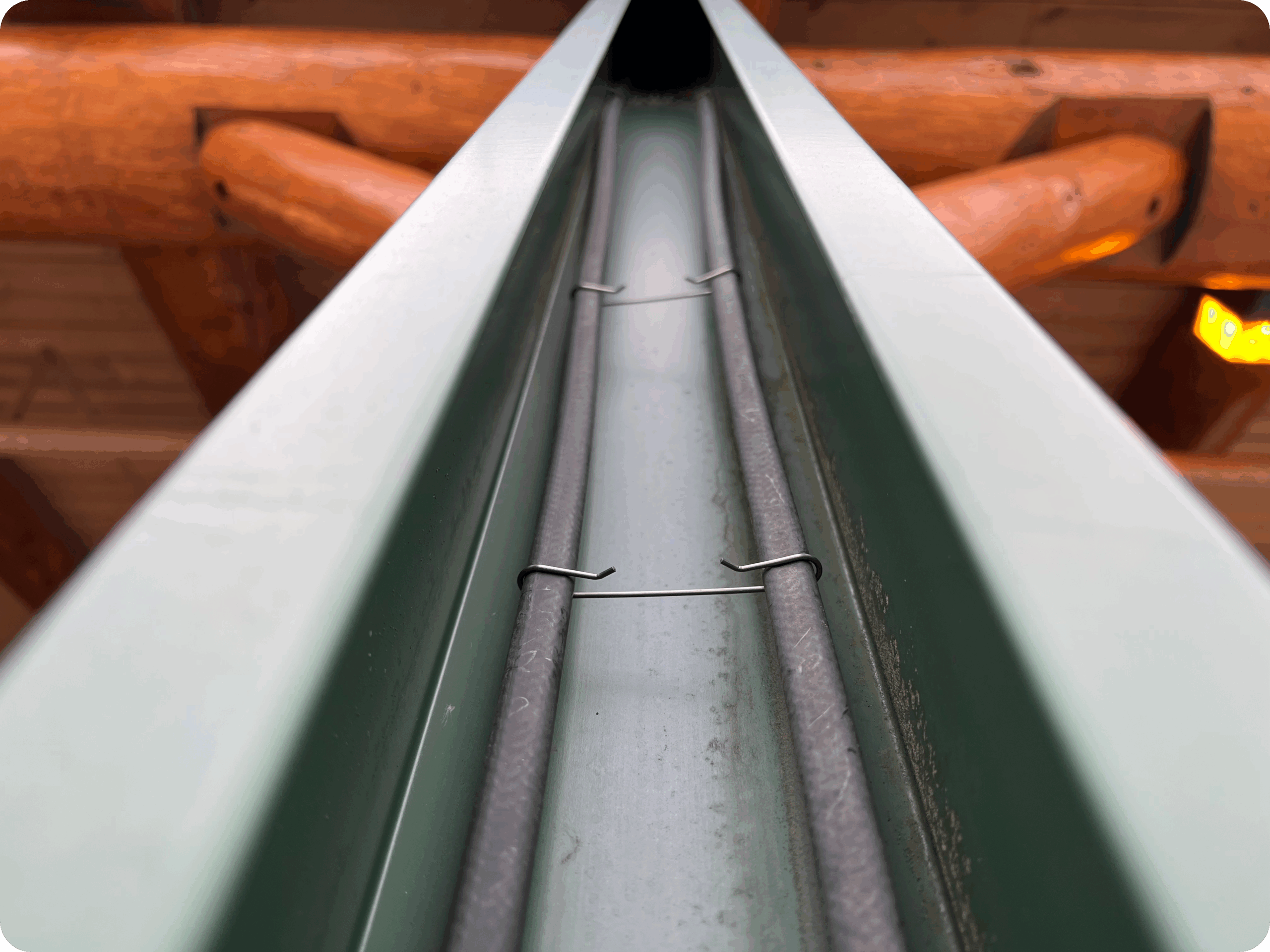
When the right kind of heat tape is installed correctly, it can keep gutters and downspouts flowing freely even in freezing conditions.
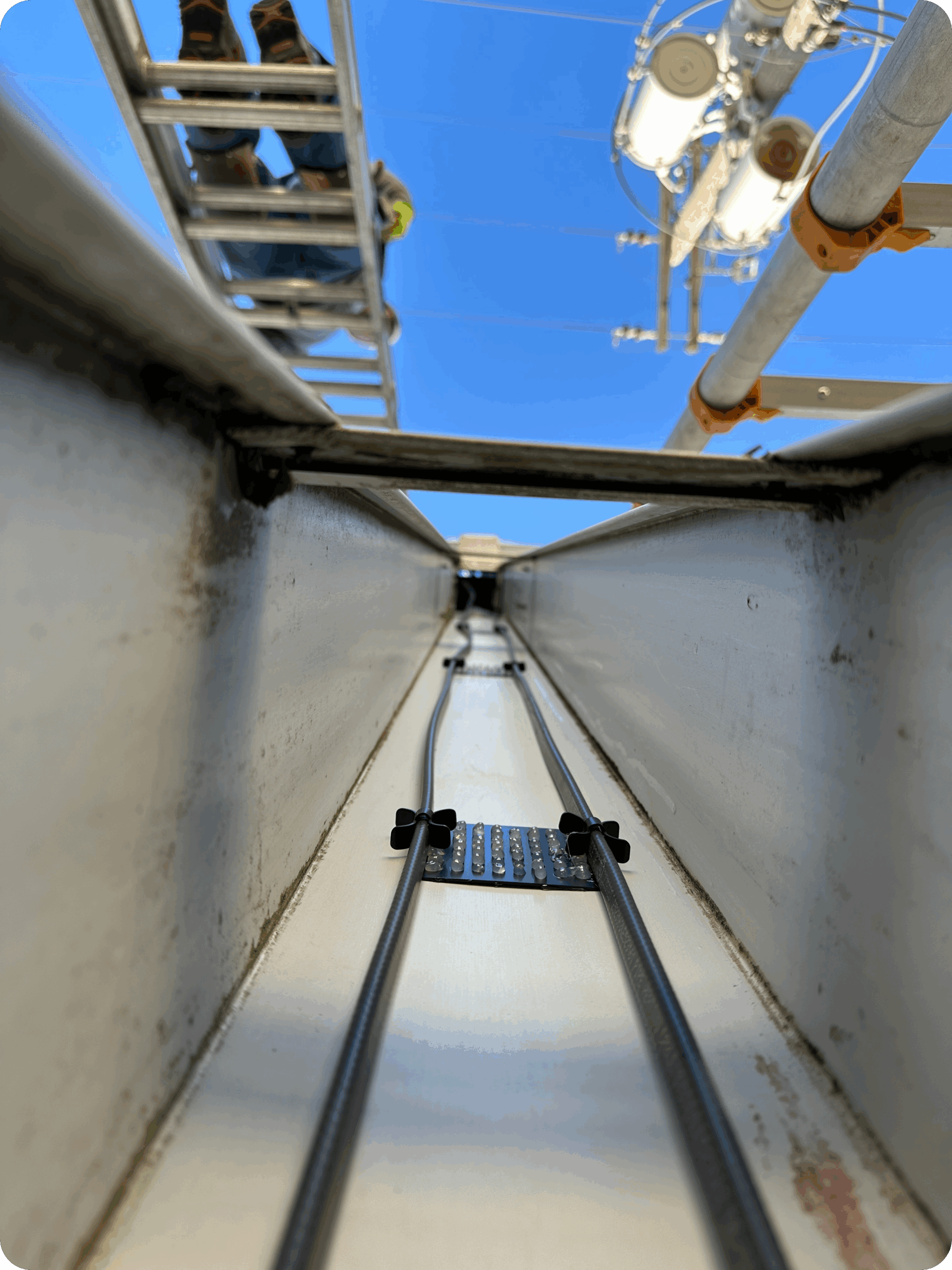
Heat Tape PRO works by creating a controlled, melted pathway inside the gutter and downspout so meltwater can drain instead of refreezing. The goal is not to melt every bit of ice out of the system. The goal is to keep water moving. As long as water has an open path, it cannot back up and cause damage.
In downspouts specifically, heat tape runs the full length of the pipe and keeps a channel open even during extended cold snaps. This prevents ice plugs from forming at the bottom of the downspout, which is the most common failure point in a gutter system. Once a downspout freezes solid, the entire gutter above it becomes useless.
The number of heat cable runs required depends on the size of the downspout and local conditions. Most standard residential downspouts can be kept flowing with a single run of self regulating heat cable. Larger downspouts, long vertical runs, or homes in very cold climates may require two runs to reliably maintain flow.
It is also important to understand the difference between cable types. Self regulating heat tape adjusts its output automatically based on temperature. It produces more heat when it is colder and less when it is warmer, which makes it ideal for gutters and downspouts where conditions change constantly. Constant wattage cable does not do this and is far less forgiving in real world installations.
When properly designed, a gutter and downspout heat tape system does one thing very well. It keeps water draining away from your roof and foundation during winter. That single function prevents a long list of problems, from gutter damage to basement leaks, and is why heat tape is such an effective tool when used where it actually makes sense.
To explore the technical aspects of heat cable installation in real-world conditions, see our partners at Kuhl’s Contracting, Minnesota’s leading ice dam prevention and roofing specialists.
Shop Heat Tape PRO and protect your gutters with the only system that shows you it’s working with our patented GlowCap™ LED indicator.