

Unfortunately, there is no single best ice dam solution because as with all home maintenance issues, solutions are driven by real-world constraints like budgets. Homeowners with high budgets will often choose different solutions than those with limited resources. In terms of ice dam prevention there are no truly “cheap” solutions. Homeowners must choose from three primary options: 1) Architectural solutions, 2) Heat cable systems, and 3) Roof shoveling. Here’s a brief examination of these approaches.
The root cause of ice dams is an uneven roof temperature that triggers a cycle of melting and refreezing. Heat escaping from a warm attic space can raise the temperature of the upper roof above freezing, causing the snow on that area to melt. As the meltwater runs down to the colder lower edge of the roof (the eaves), it hits a surface below 32°F and refreezes into a ridge of ice, forming an ice dam. This ice barrier blocks additional meltwater behind it, leading to pooled water that can seep under roofing and leak into the home, causing potential water damage to walls, ceilings, and insulation.
Homeowners have two main long-term approaches to preventing ice dams.
| Method | Average Cost | Effectiveness | Maintenance Required | Best For |
| Architectural Solutions: Insulation, ventilation, etc. | $15,000-$40,000 | High (when done correctly) | None after installation | Homeowners with large budgets planning major renovations |
| Non-Architectural Solutions: Heat Cables | $1,000-$2,000 | High | Minimal (visual checks) | Homeowners with smaller budgets seeking reliable, affordable protection |
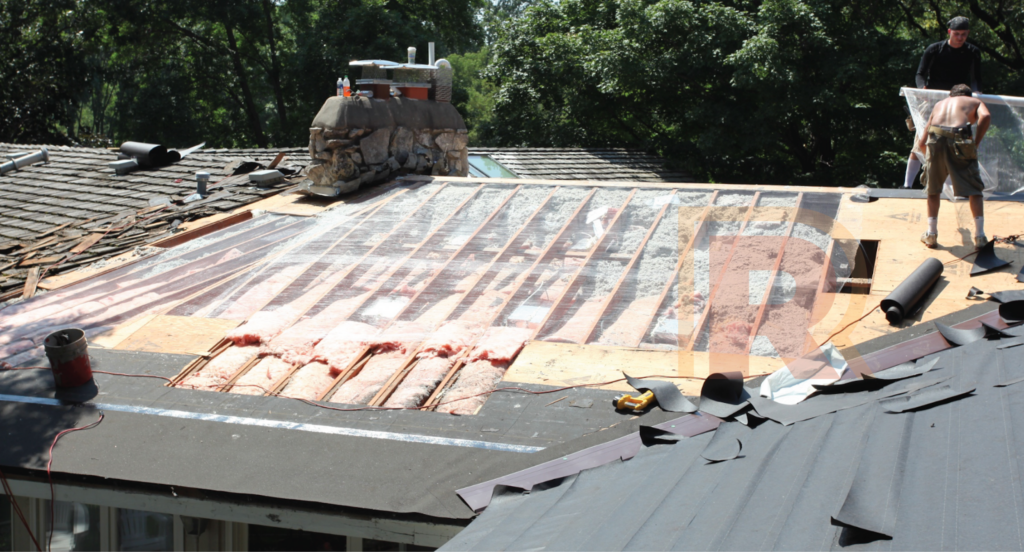
Industry professionals often say the best way to solve ice dam issues is to fix the house itself, in other words, make architectural enhancements like adding insulation, improving roof ventilation and especially sealing up attic air leaks that allow heat into the roof. Architectural solutions are the top of the food chain for ice dam prevention because they address the underlying cause, heat loss. Ice dams form when parts of your roof get warmed above freezing, snow melts, and that meltwater runs down to a colder area at the eaves where it refreezes. If you stop the roof from warming unevenly, you stop feeding the problem.
Most people assume ice dams are an insulation problem. Sometimes they are. More often, they are an air leakage problem. Warm air is sneaky. It finds bypasses into attic and roof cavities through gaps around lights, bath fans, plumbing stacks, chimneys, attic hatches, top plates and open chases. Those leaks create localized hot spots on the roof. That is the ignition source for the meltwater that turns into an ice dam.
A real architectural plan focuses on three things working together. Air sealing to stop warm air from escaping into roof cavities. Insulation to slow heat transfer. Ventilation to help keep roof surfaces cold and consistent when it is actually possible to vent the assembly effectively. Any contractor who only talks about blowing in more insulation without diagnosing air leaks is usually skipping the hard part.
Architectural fixes are not one size fits all. Roof geometry, eave depth, cathedral ceilings, knee walls, dormers, valleys and sun exposure all change the math. Some homes respond beautifully to targeted air sealing and insulation upgrades. Others have structural limitations that make a full solution expensive or complicated. That is not pessimism, that is reality.
Cost and disruption matter. Architectural solutions are remodeling projects. They can involve dense air sealing work, insulation removal and replacement, baffle work, new venting strategies, and in some cases removing roof decking to rebuild the assembly correctly. In many markets this work lands in a wide range, often from ten thousand to eighty thousand dollars depending on scope and access. The upside is that when it is done well, it can reduce ice dams and lower energy bills at the same time.
The honest takeaway is this. Architectural solutions are the best long term path if you have the budget and you want to address the root causes. They can be a smart investment. They can also be imperfect because winter is a perfect storm of variables and some homes are simply prone to trouble spots. That is why many homeowners combine architectural improvements with targeted protection in the specific areas that keep getting hit.
Ice dam prevention projects that improve insulation and ventilation typically cost tens of thousands of dollars (on the order of $10,000 to $40,000 on average). The work required is hard and messy, often involving demolition and reconstruction of parts of the interior or exterior of the home to access insulation or seal leaks. When done properly, these upgrades can indeed reduce ice dams (and have the side benefit of improving energy efficiency). But when done poorly, that money can be wasted or even make the problem worse.
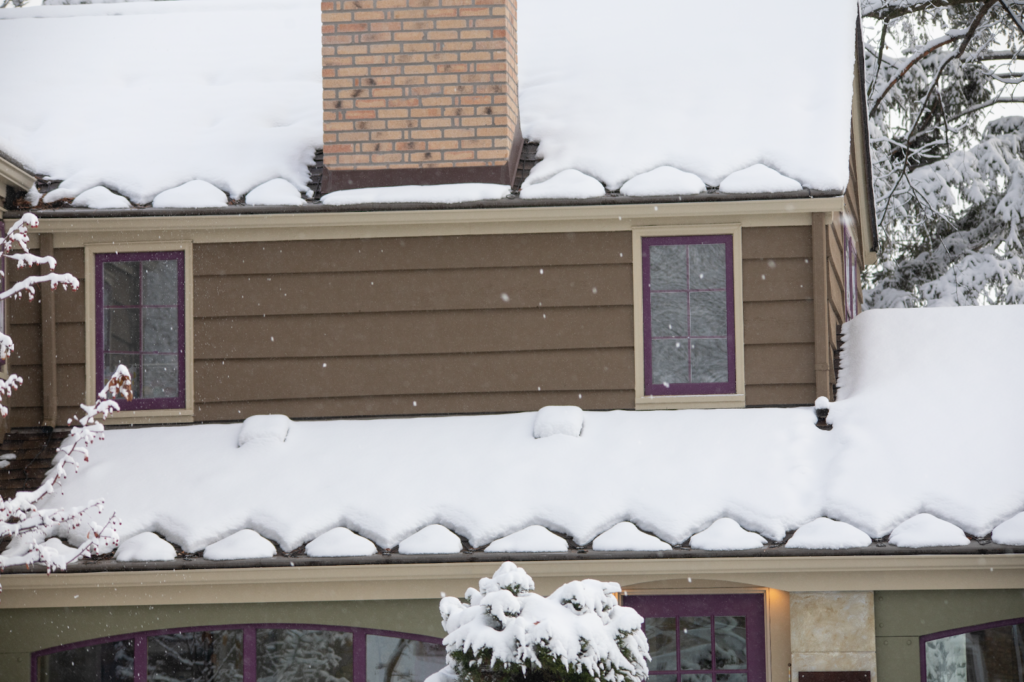
Heat tape is about targeted control, not rebuilding your house. Heat cable does not fix the underlying causes of ice dams and no honest professional would claim that it does. What it does do, when specified and installed correctly, is stop ice dams from forming in the exact locations where they keep causing trouble. For many homeowners, that is enough.
Heat cable works by creating reliable melted pathways through snow and ice so water can drain off the roof instead of backing up. It is typically installed along eaves, in valleys, inside gutters and down through downspouts. The goal is simple. Give meltwater a safe place to go before it refreezes and causes damage.
One of the biggest advantages of heat cable is cost. Compared to architectural projects, heat tape is far more affordable. Most systems can be installed in a day and many homeowners choose to energize them only when conditions warrant it, not all winter long. That makes heat cable a practical solution for people who want results without committing to a major remodeling project.
Here is the critical part. Not all heat cable is created equal. Building industry complaints about heat cable come primarily from one category of product called constant wattage cable. This is the inexpensive cable commonly sold in hardware stores. It runs at full power all the time, cannot be safely overlapped, is restricted by temperature limits, is not approved for most roof materials, cannot be repaired if damaged, and typically carries a one or two year warranty. When these systems fail, they do not fail gracefully.
Self-regulating heat cable is an entirely different class of product. It adjusts its heat output automatically based on surrounding temperature. It uses less energy when it is warmer and more when it is colder. It can safely overlap, can be used on any roof material, operates in extreme cold, can have 10+ year warranties and can be repaired in the field if damaged. Tolerance for real world conditions is why professionals insist on using it for their installations.
Heat cable should be thought of as a precision tool. It is not a blanket solution and it does not need to run everywhere. When installed in the right locations using self-regulating cable can reliably prevent recurring ice dam problems for a decade or more.
Here’s what it really comes down to: If you have the budget and the appetite for a remodeling project, architectural solutions belong at the top of the list. If you want a targeted, cost-effective way to stop ice dams from causing damage right now, heat cable is a smart option. Just make sure it is the right kind of cable, installed with intention, not the cheapest product someone could find on a shelf.
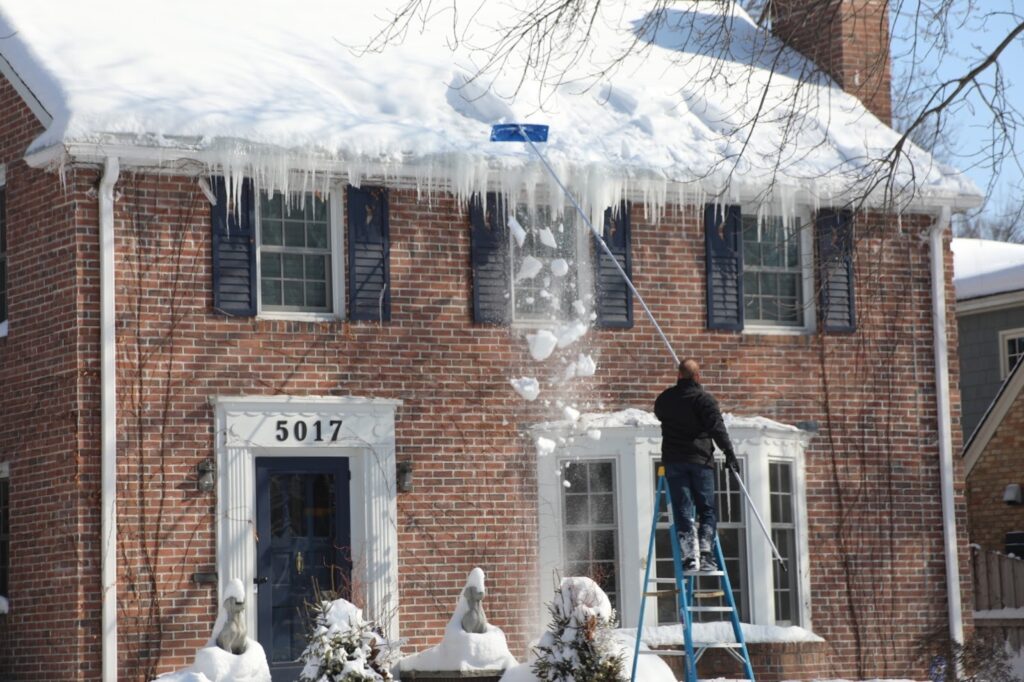
Manually removing snow from the roof (often by roof raking or shoveling) can indeed prevent ice dams, but it’s a method fraught with challenges and risks. To be effective, all the snow must be cleared from the entire roof section prone to ice dams, not just the area near the eaves. Clearing only the lower few feet of snow is a critical mistake that can create a “double-dam,” which is a second ice dam forming higher up on the roof at the line where the remaining snow was left. This secondary ice dam can end up even worse, as it traps water farther up the roof. Such double-dams are very expensive to remove and can cause severe damage if they persist.
In practice, completely clearing a roof after every snowfall is difficult and dangerous for the average homeowner. Many ice-prone roofs are two or three stories high or have steep pitches, making them inaccessible from the ground. This means someone has to climb up there, which is generally not a good idea for the novice to attempt due to the risk of falls and injury. Hiring professional roof snow removal services avoids the personal risk, but it is costly – an average roof shoveling job runs about $400 per visit. And it’s not a one-time expense: professionals might need to be called repeatedly throughout the winter after each significant snowfall.
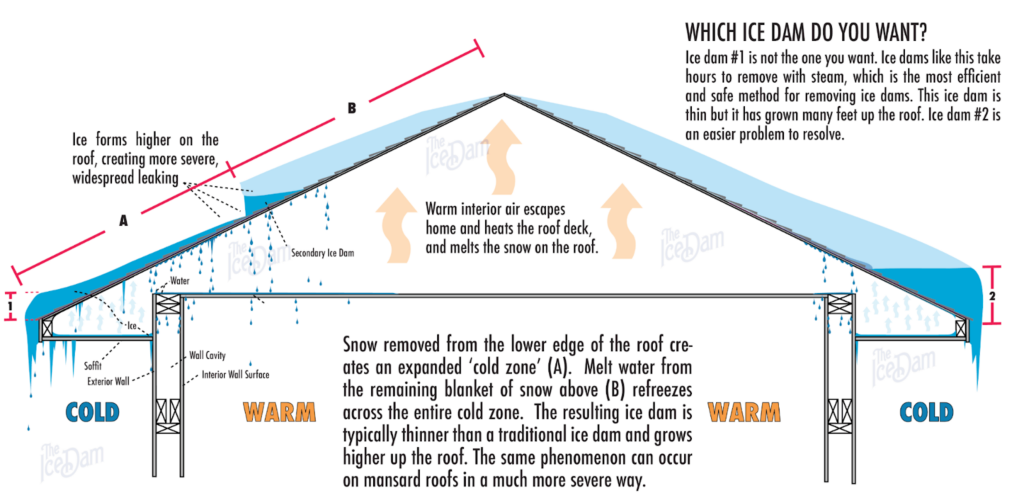
Furthermore, to truly prevent ice dams, one must be vigilant (any snowfall over about 2 inches should be scraped off the roof within 24 hours). Under the right conditions, ice dam formation can start within one day of a fresh snowfall. Maintaining this kind of constant upkeep is impractical for most people. Inevitably, life gets busy or a storm goes overlooked and the snow ends up melting and refreezing into an ice dam despite one’s best efforts. In short, roof shoveling can work as a stopgap because it removes the fuel (snow) that feeds ice dams, but it requires continuous, careful effort and/or significant expense. For most homeowners, it’s a risky and labor-intensive strategy that is difficult to sustain all winter long.
Ice dam prevention comes down to two broad paths and most homeowners choose based on budget, timing, and long-term goals. Architectural approaches address the root causes by controlling heat loss through air sealing, insulation, and ventilation. When done well, they offer the best long-term solution but they are remodeling projects with real cost and disruption. Non-architectural approaches focus on managing the symptoms before damage occurs. Roof shoveling reduces snow load and limits meltwater formation, especially after large storms, but it requires ongoing effort and does not stop refreezing at the eaves. Heat cable creates targeted melt paths that allow water to drain safely in the exact areas where ice dams form. It does not fix the underlying causes, but when installed correctly using self-regulating cable, it is a reliable and cost-effective way to prevent recurring damage. There is no single right answer. The best approach is the one that fits your home, your budget, and how aggressively you want to deal with the problem before water shows up inside.