

Some heat cable installation projects involve a handful of basic parts. Cable, GripClips™, ThermaCord™, CableGuard™. Done. There are many projects that involve a variety of roof materials and site conditions that involve much more, however. Below is a look at some of the most common accessories offered by Radiant Solutions Company to address a wide variety of applications. The numbers on the diagram show the locations of different parts of the heat cable system.

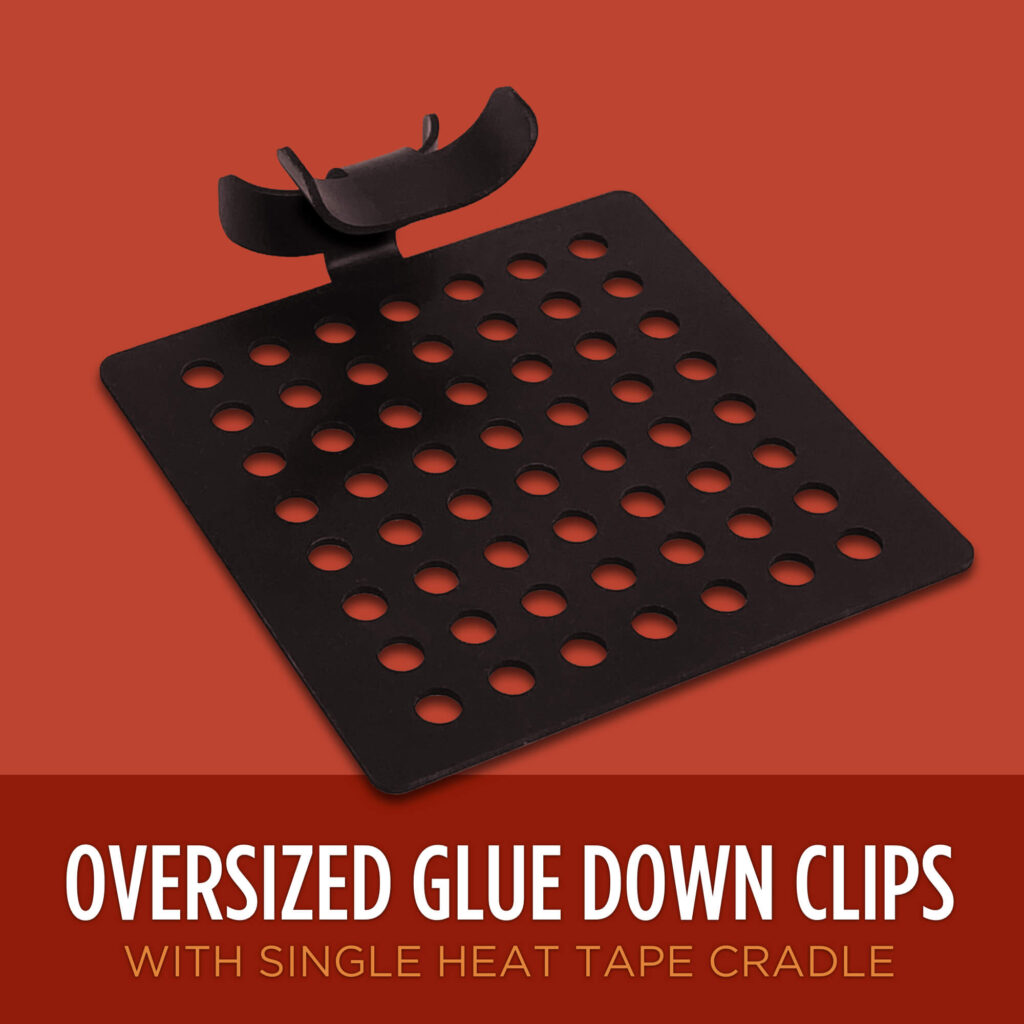
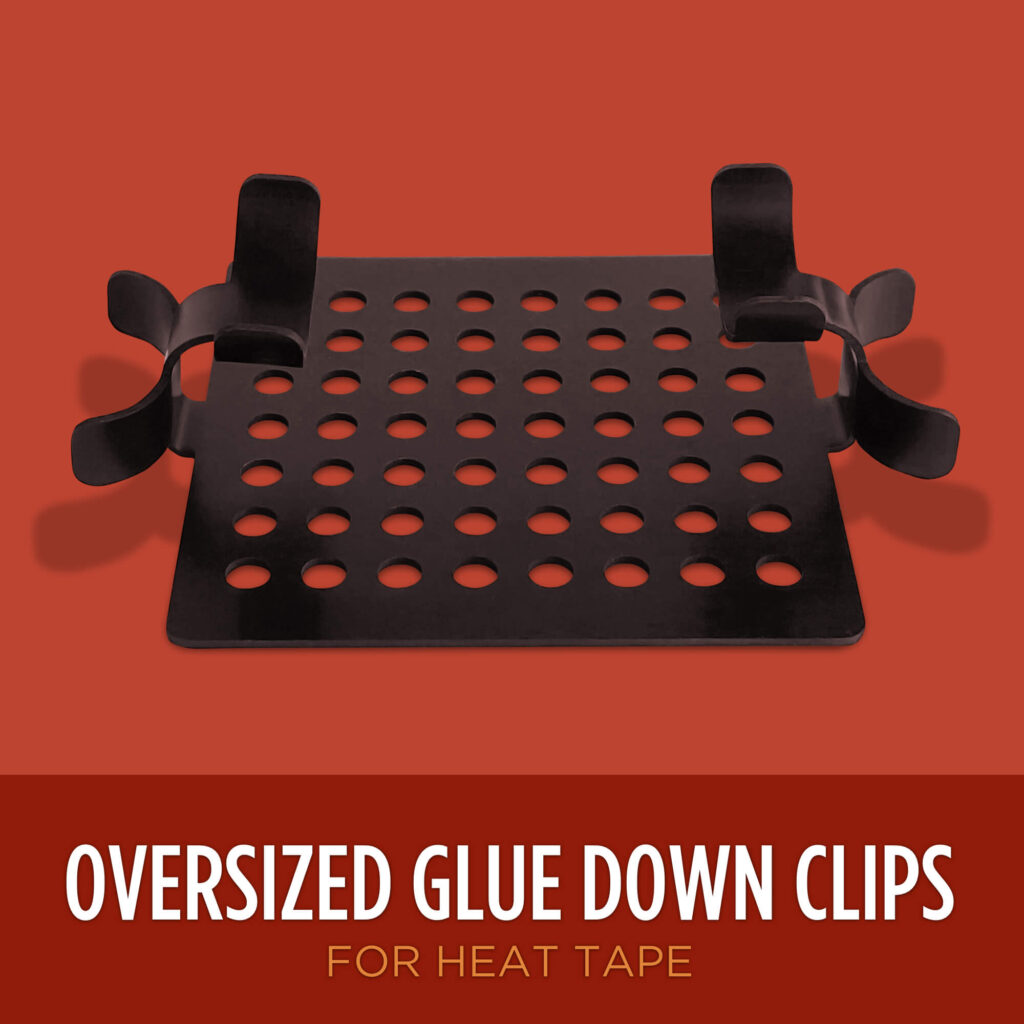
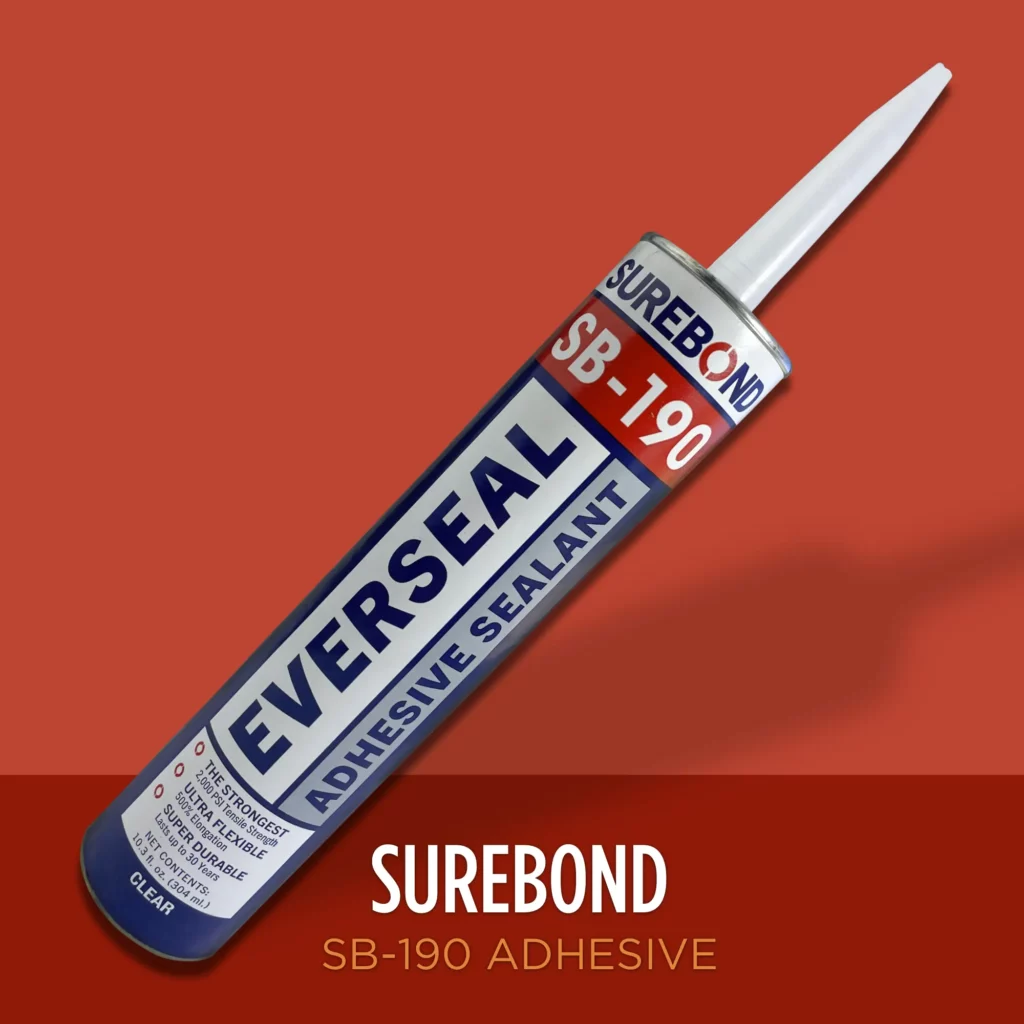
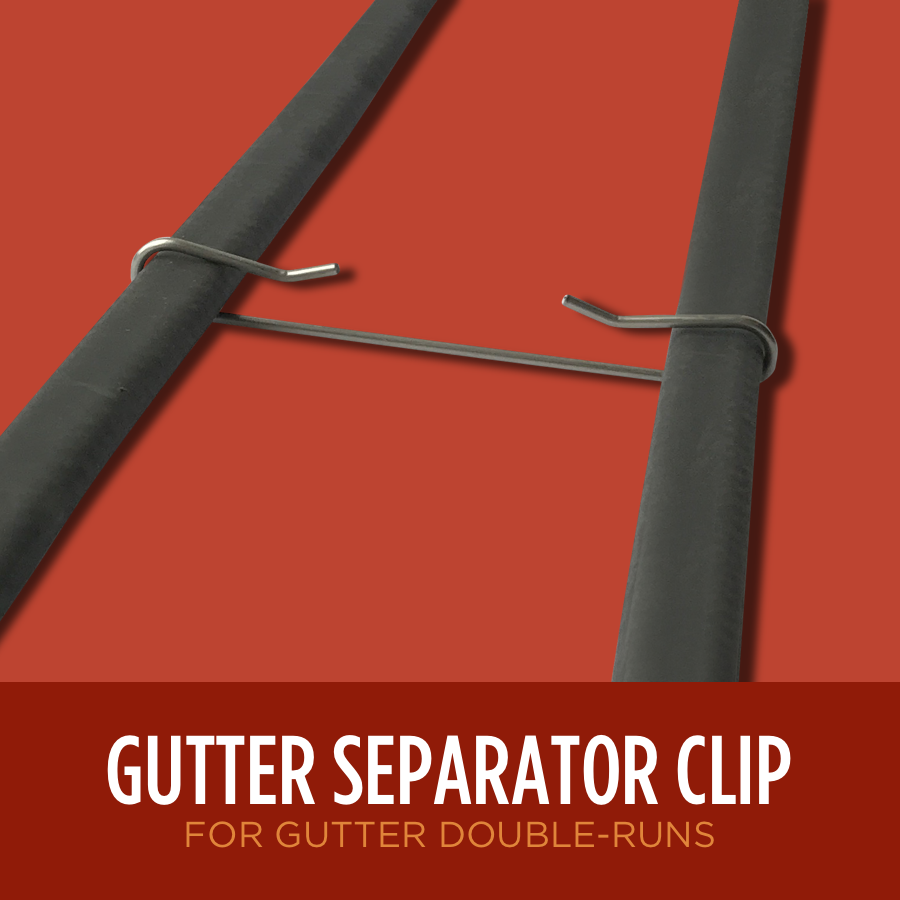
Installing heat tape on flat or low slope roofs is pretty simple. Normally the work will not be seen so you will be graded on performance, not appearance. That said, we offer a number of accessories that make a fast, professional outcome easy. The most widely chosen clips for installing heat cable on flat or low slope roof are the DDK series (DDK-719-1 – Single Cradle Heat Tape Clip and the DDK-719-2 Double Cradle Heat Tape Clip). We recommend SureBond SB 190 for all of our glue-down heat cable clip applications. The RSC-555 Heat Cable Separator Clip is used to keep cables in alignment and organized for double heat tape runs across the roof surface or between DDK-719-2 clips to maintain consistent melting patterns.
Here’ the skinny on the terms ‘sloped roofs’ and ‘shingled roof systems’. Most roof systems in North America that are not flat or metal fall into the sloped, shingled roof system bucket. The vast majority of those roofs are simple asphalt shingled roofs. The term ‘shingled’ simply means that each piece of roofing working up the roof is placed higher and on top of the piece below. This is why roofers start installing from the bottom at the eave and work up towards the ridge. When you think about water and gravity this makes sense.
Shingled roof systems include a wide variety of materials such as asphalt shingles, wood and synthetic shakes, wood shingles, natural and synthetic slate (such as Davinci), concrete tiles, clay tiles and more. The good news is that we have installation accessories for all of them! Probably 95% of the heat cable roof clips we sell by volume is the GripClip™ 325, made for typical asphalt shingle roofs (like the one in the illustration above). The GripClip™ 625 works on materials from 3/8″ to 5/8″, including cedar shingles, Davinci Slate and other synthetic roofing materials. The GripClip™ 875 works on roofing material ranging in thickness from 5/8″ to 7/8″, including medium hand-split cedar shakes, heavy hand-split cedar shakes, CeDUR and other brands of synthetic shakes.
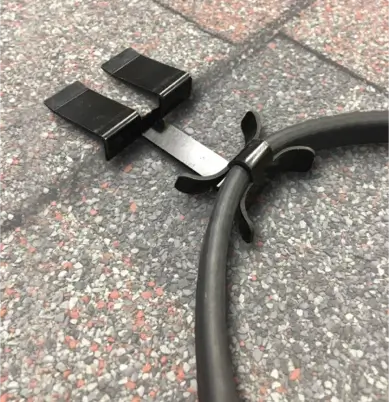
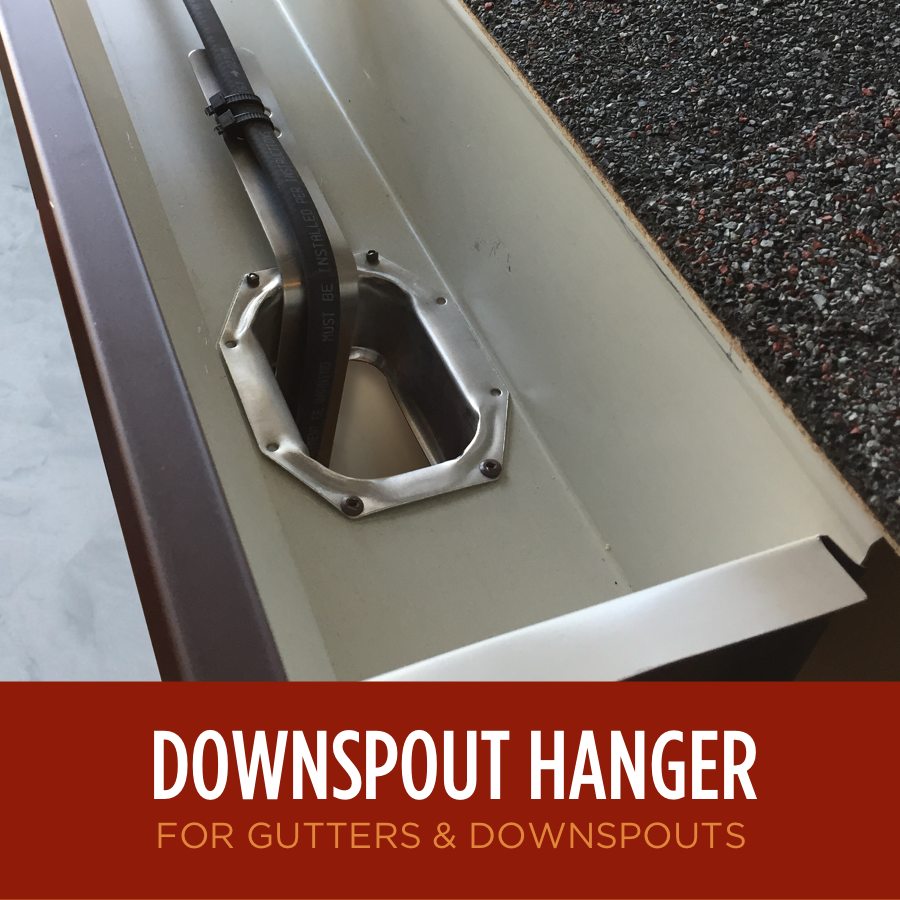
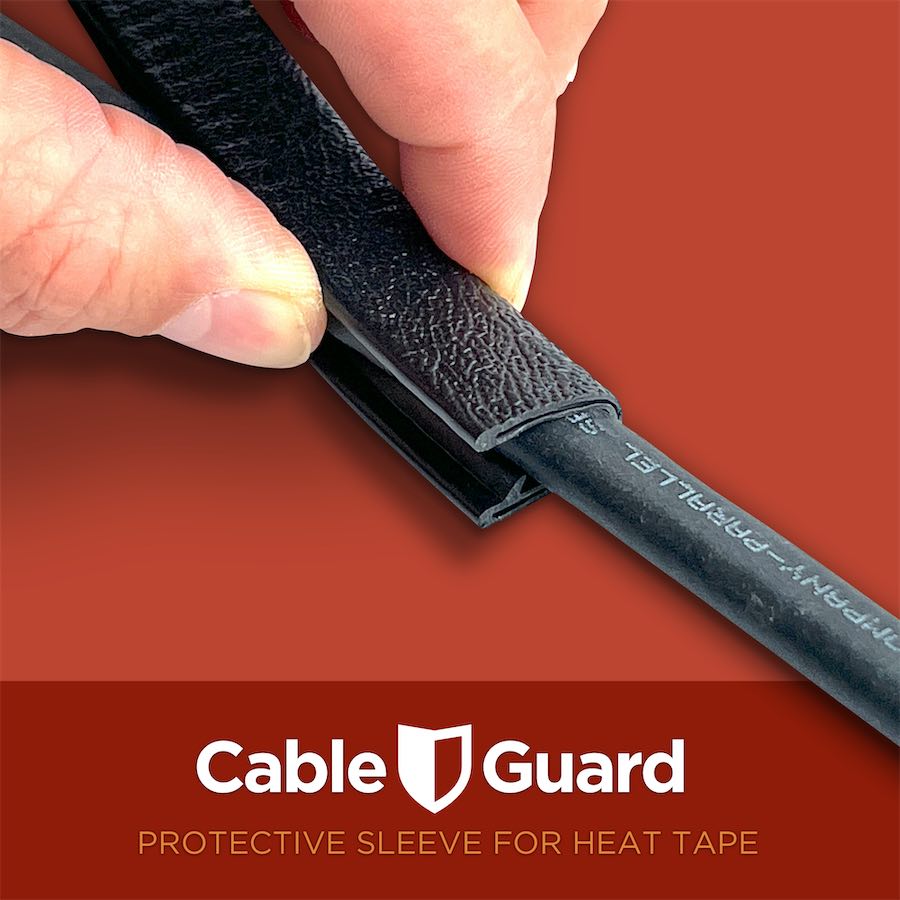
If you’re confused by the term ‘downspout hanger’, you’re not alone. No one knows where it came from but at this point it has been universally adopted to refer to a device that protects heat cables as they make their transition from a gutter down into a downspout. The reason why this oddly named device is so important is that the aforementioned transition area almost always has one or more heat tape killers (things that damage the cable and reduce system lifespans, or end them before the cable is even turned on). These hazards include the sharp points of sheet metal screws and the razor sharp edges of the metal components of the gutter system itself. When gutter installers cut holes for the downspouts the outcome is usually sharp edges left behind. But fret not. We offer two simple solutions. The first of which is common among all heat cable manufacturers and is cleverly referred to as a ‘downspout hanger’. Ours is model number IDP-115 and we sell a lot of them. The up-and-comer in the downspout hanging world is the humble CableGuard™, which is quickly taking over the market for the simple reason that it’s far easier to install. Plus, because it’s 24″ long, it can be cut in half to address multiple areas. Some heat tape installers use 12″ of CableGuard™ for a downspout hanger and the remainder to protect the cable in other vulnerable areas, such as where the cable peaks out from the bottom of the downspout below. This makes the CableGuard™ effectively half the cost of the standard downspout hanger.
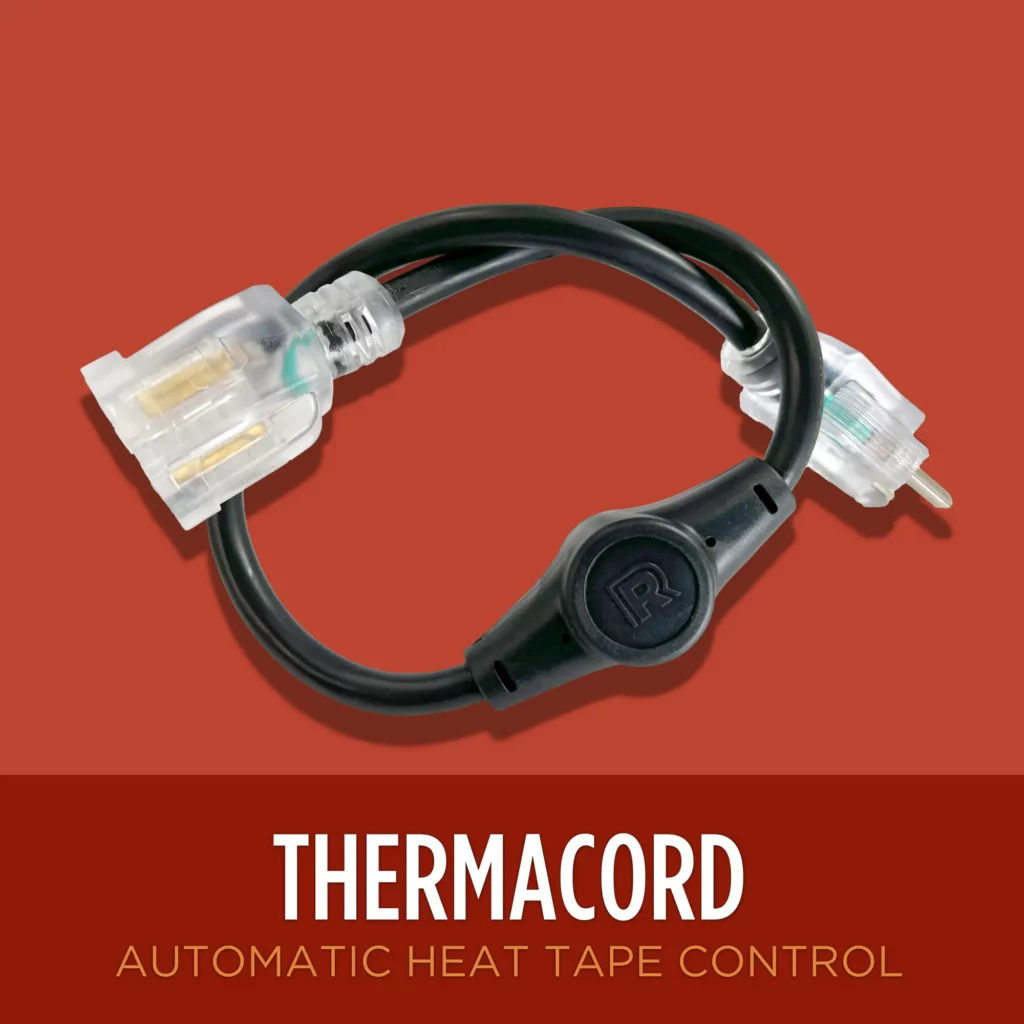
Confession. For years we sold our customers something called the ThermoCube. It’s a clever little device designed control anything that’s plugged into it ‘thermostatically’, which is to say, it turns things on and off with changes in temperature. The only problem was that the ThermoCube didn’t fit inside code-required outdoor outlets, which have plastic shrouds around them to prevent water ingress. After year of shrugging our shoulders and telling people ‘there are no other options’ we did what we do and asked a dumb question: Why hasn’t someone invented a better solution? Hence the ThermaCord™ was born. The ThermaCord™ does everything the ThermoCube did but with a few distinct advantages. First, it actually allows you to plug into your outdoor outlet without creating a fire hazard. That’s always a bonus. Next, it has not one but two LED’s embedded in the plug and receptacle ends to tell you power is at the outlet and also when the power is being pushed through to your heat cable. Simple. And speaking of pushing electricity, the entire point of the ThermaCord™ is to save power by turning the heat cable on and off at 37º and 50º respectively. ThermaCords™ pay for themselves in no time through energy bill savings.
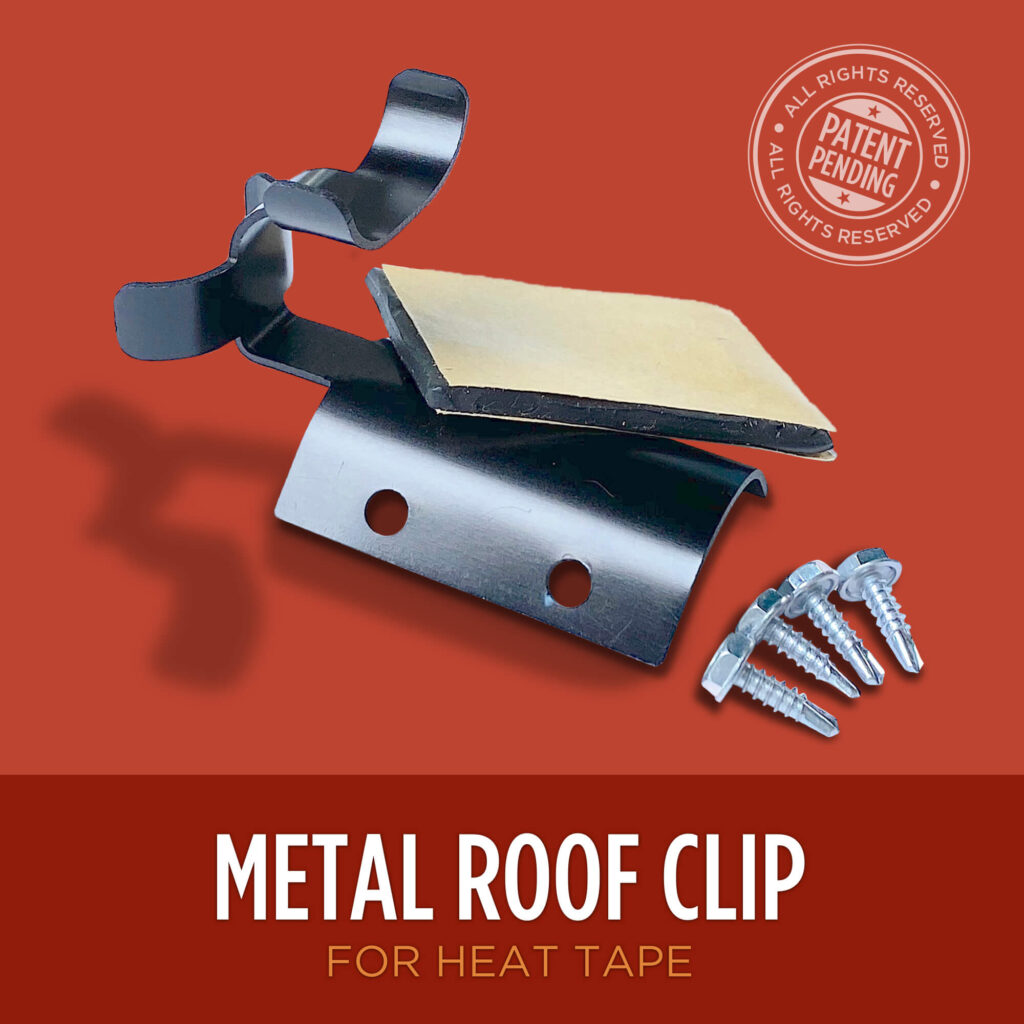
Our JS-222 Corrugated Metal Roof Heat Cable Clip is designed to work with the vast majority of ‘exposed fastener’ roof systems. An exposed fastener metal roof is, simply put, a roof comprised of metal panels that has screws you can see through the surface. The two most common exposed fastener metal roofs are corrugated and trapezoidal seam (AKA, ‘R-Panel’). The JS-222 has a curved body the sits on top of the corrugated panel seams and comes with a custom-sized synthetic rubber (butyl) pad and four self-tapping sheet metal screws. When screws are driven through the butyl pad a lifelong, watertight connection is formed around the screws, ensuring moisture can not get into the roof around the clip location.
Heat Tape PRO is approved for use inside open, non-pressurized drain pipes made of PVC, ABS and copper. Installation is normally as simple as using a fish tape to pull the heat cable through the pipe. The GlowCap™ LED end seal is particularly nice for these applications because it allows you so visually verify the entire length of heat cable is energized and working. The normal ‘feel if the cable is warm’ test is not possible when the cable is in a pipe.
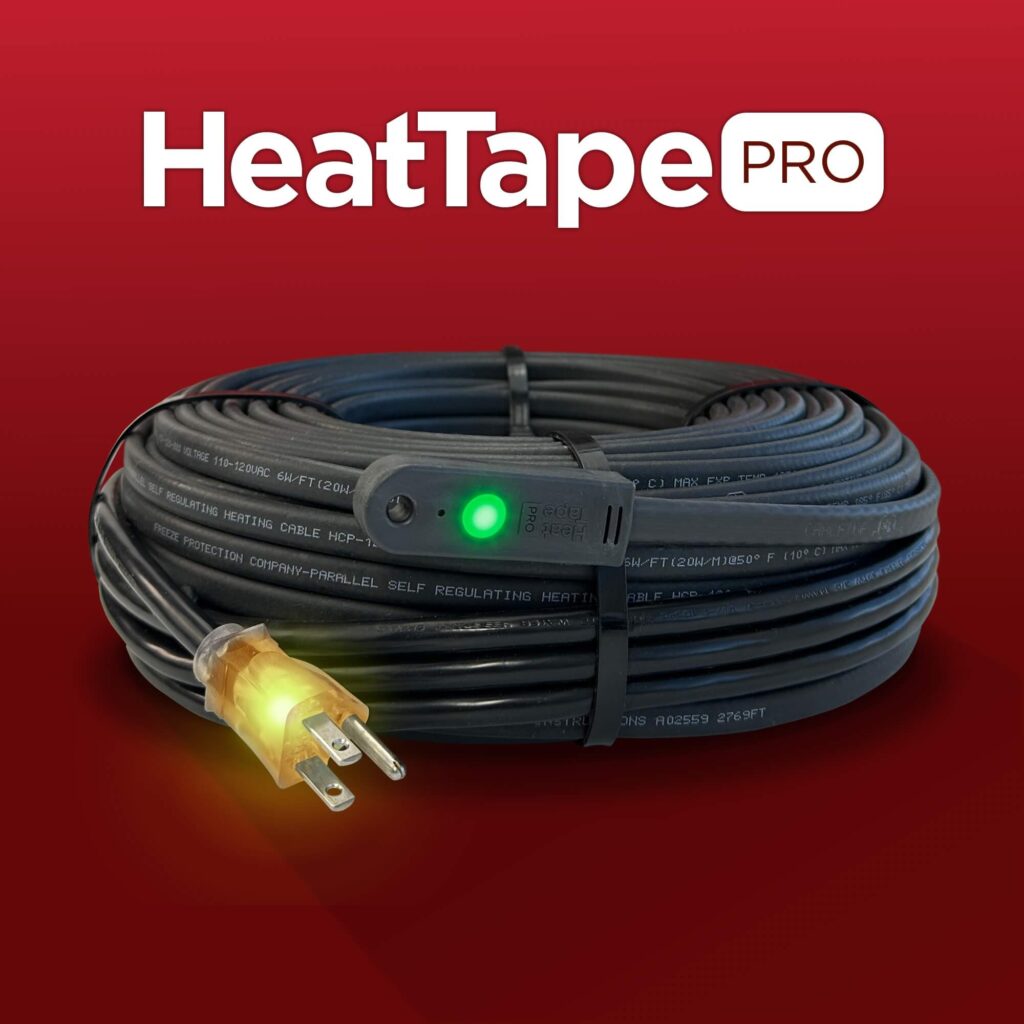
Speaking of the GlowCap™, let’s talk about the smartest locations to place it on typical roof and gutter de-icing heat tape installations. The purpose of the GlowCap™ is simple. It allows you to verify your cable is working from one end to the other. If manufactured by a good company, self-regulating heat cable should perform well for many years in even the harshest environments, and Heat Tape PRO is no exception. That said, problems do occur and cables get de-energized at times that are less than ideal, like a roof in the middle of winter with lots of snow. The problem is that there are many situations where it is not possible to see the traditional telltale indicators of proper cable function (think of the classing zig-zag melt pattern created by heat cable on the eaves). Cables can get buried when snowfall is exceptional and while the cable may still be doing it’s job under the snow, there is now way to tell if it is energized, in particular if the heat cable is high or otherwise inaccessible. Flat roofs are another place where GlowCaps™ are helpful. Simply install the cable on the roof and pop the GlowCap™ over an outside edge so you can look up and see the assuring green glow of the LED. As we say, if it’s green, you’re good to go! Perhaps the circuit breaker that powers the cable trips for some reason, or a squirrel has chewed through the cable, or someone who shoveled the roof damaged the cable. The list goes on. When a GlowCap™ is a part of the system it is much easier to rest in peace. All of our pre-terminated, plug-in ready heat cables come with a factor-installed GlowCap™ at the end of the cable. We also offer a field installer GlowCap™ End Seal that allows for installers to place a GlowCap at the end of any custom heat tape system installed from a spool.
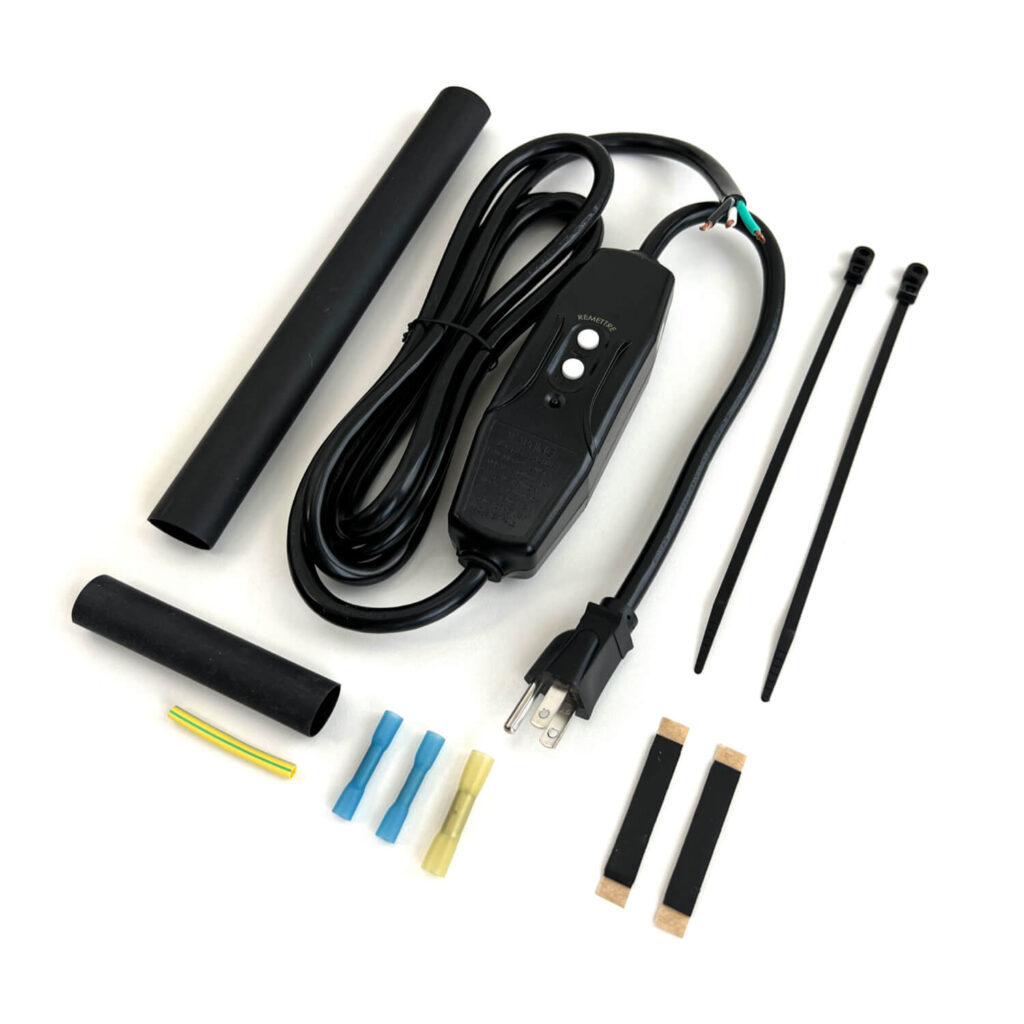
The PPK-319 Self-Regulating Heat Cable Power Connection Kit allows installers to install up to 150 feet of our 6watt/ft Heat Tape PRO cable off the spool. The kit come with a GFCI switch to enhance safety and works for situations including when adding a GFCI breaker or GFCI outlet to an outdoor box is cost prohibitive or otherwise not feasible.
The GVG Standing Seam Metal Roof Clips come in three widths to accommodate seams from 1/8″ up to 5/8″ wide. These clips can be installed through the seam with provided self-tapping sheet metal screws, which when couple with our custom MKS-10222-2 Butyl Pads, or a high quality sealant, will provide a lifetime of watertight performance. Alternatively, you can throw the screws in your random fasten can and install the GVG with SureBond SB 190 adhesive for a fastener-free installation. Both methods will provide a crazy-strong anchor point for a heat cable system on a standing seam metal roof.
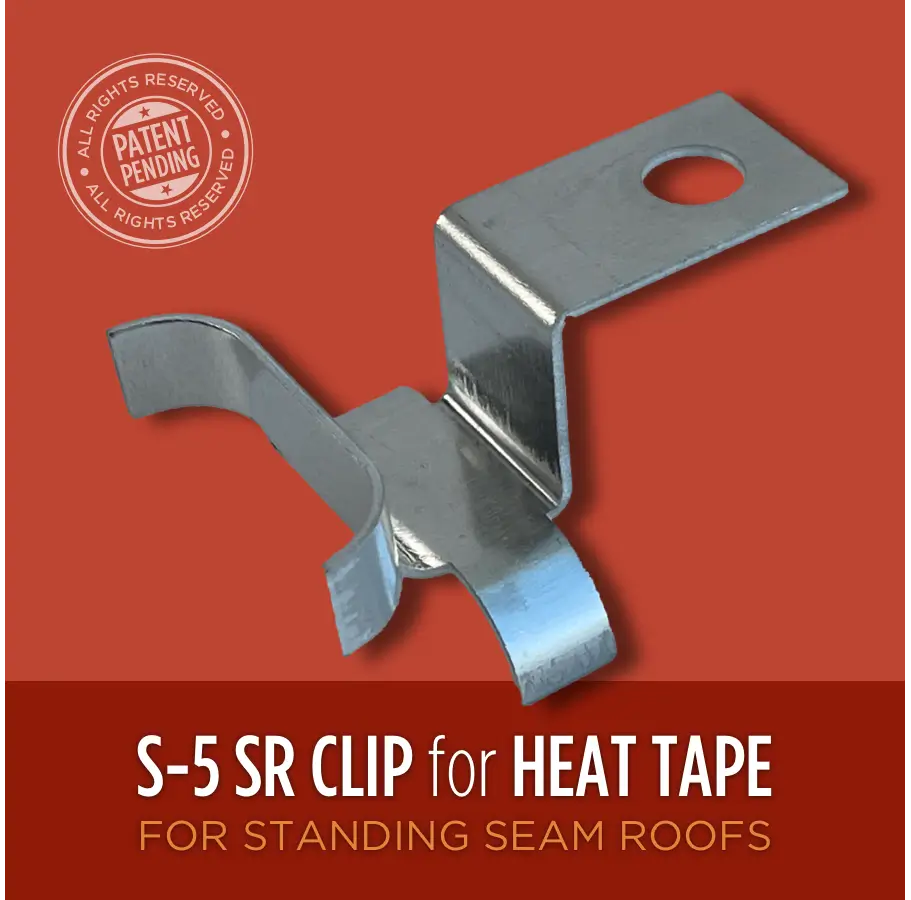
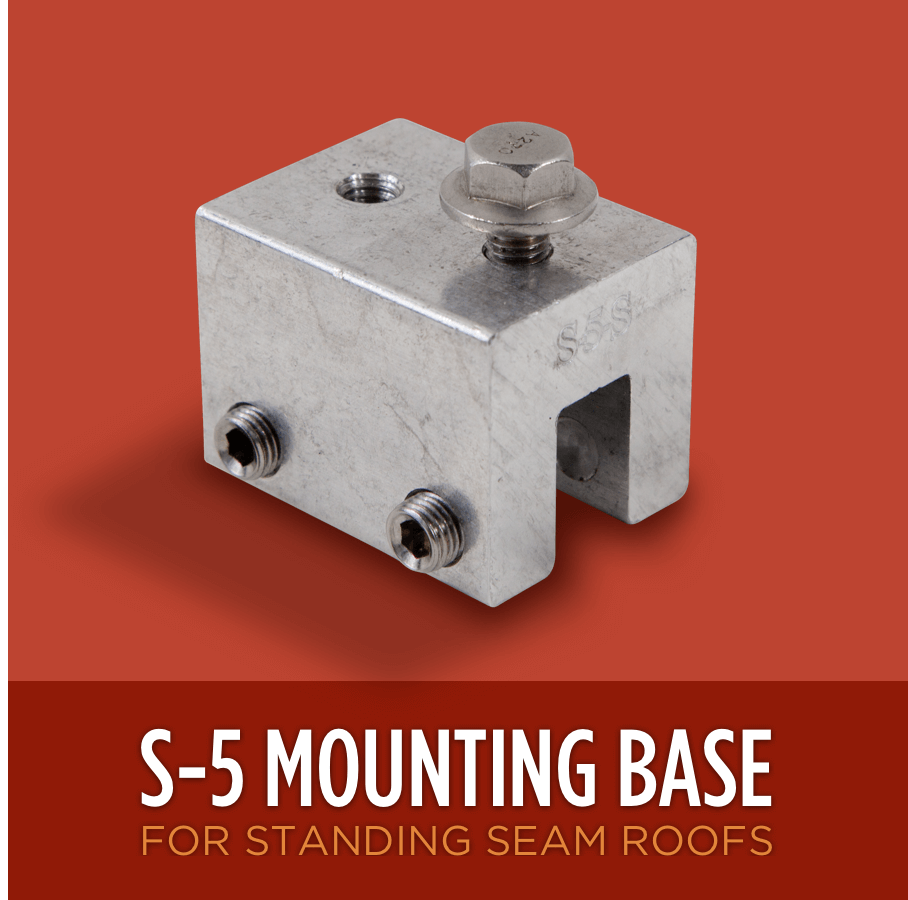
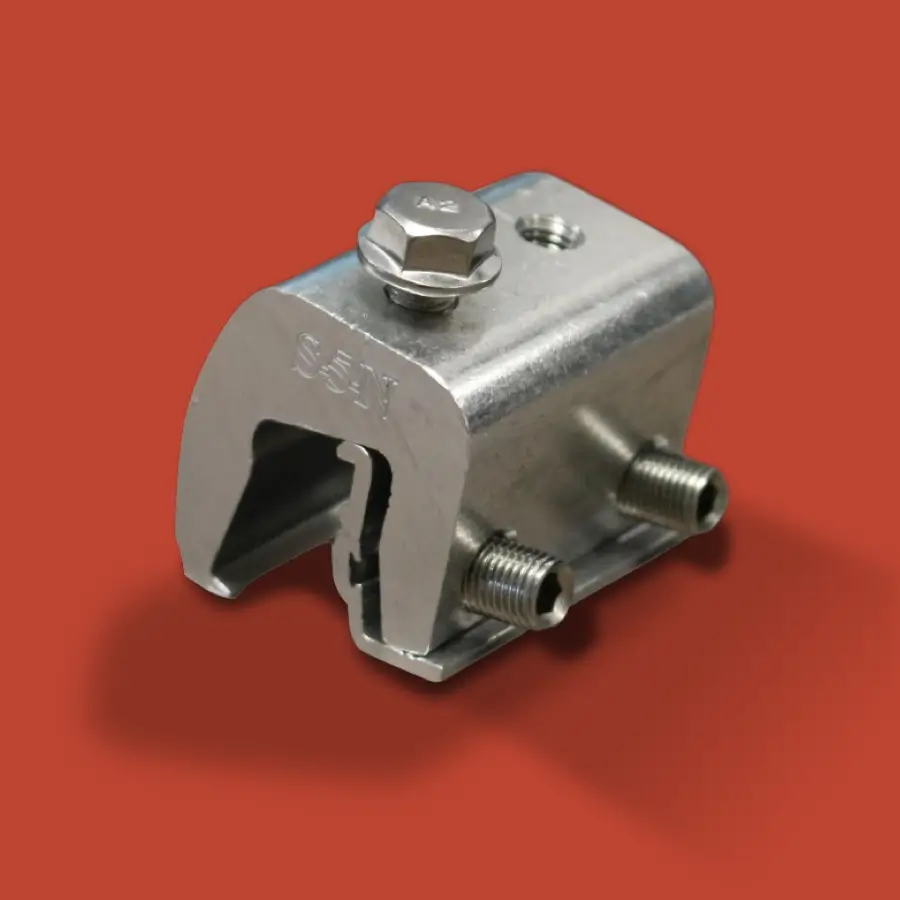
Another popular method for installing heat cable on standing seam metal roof is the S5 Roof Clamp series, including the S5S and the S5N. While these clamps are arguable overkill for a lightweight heat cable, the compression-based anchoring methodology is fast and can be removed with relative ease in the future. The S5 roof clamps need to be coupled with our patented S5-SR Metal Roof Clips to complete the system. Both of those products are shown below. As with all of our heat tape clips, the S5 Clamp + S5-SR Clip assembly is super fast and easy to install for anyone with basic mechanical skills. (opposable thumbs required).
As the name suggests, this is a go-to clip for many of our installers because it solves a lot of problems. The MPC-325 Multi-Purpose Heat Tape Clip features the patented body of the GripClip™ that is modified to accommodate a UV-resistant cable tie. The net result is a clip that will allow for omni-directional cable placement. That’s a fancy way of saying that it allows you to install heat cable in any direction. Traditional nail-on roof clips and GripClips™ have a fix cradle that can limit installations in particular circumstances. The MPC-325 is for use on all asphalt shingle roofs from 1/8″ to 3/8″ in thickness. It can also be used on the edges of metal flashings. We are constantly surprised by the creative ways our professional installers use these clips. One particularly good use is in woven (i.e., ‘closed’) valleys, where there is no space for standard GripClips™. The MPC-325 is also used in other industries, such as satellite dish installers and solar panel contractors because they are a fast and durable method of managing wires of all types that need to travel across the surface of a roof.
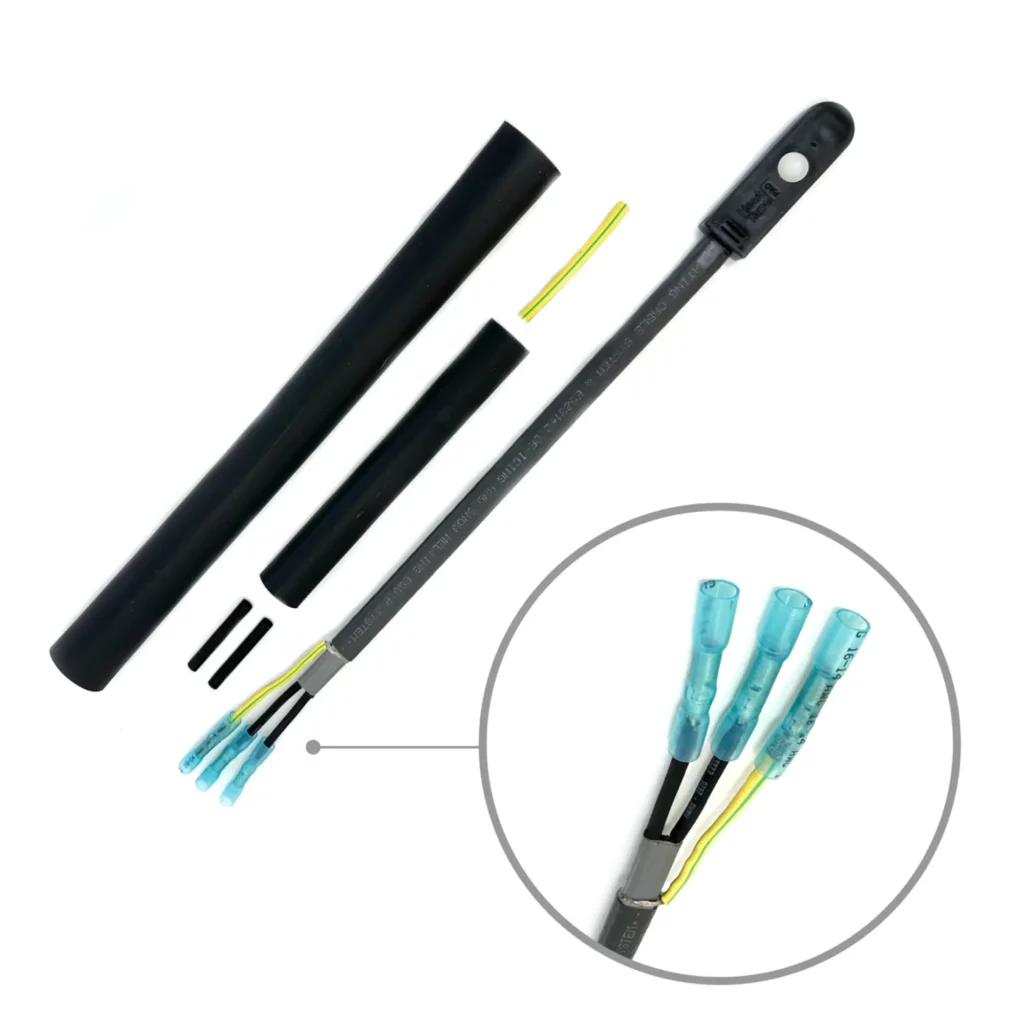
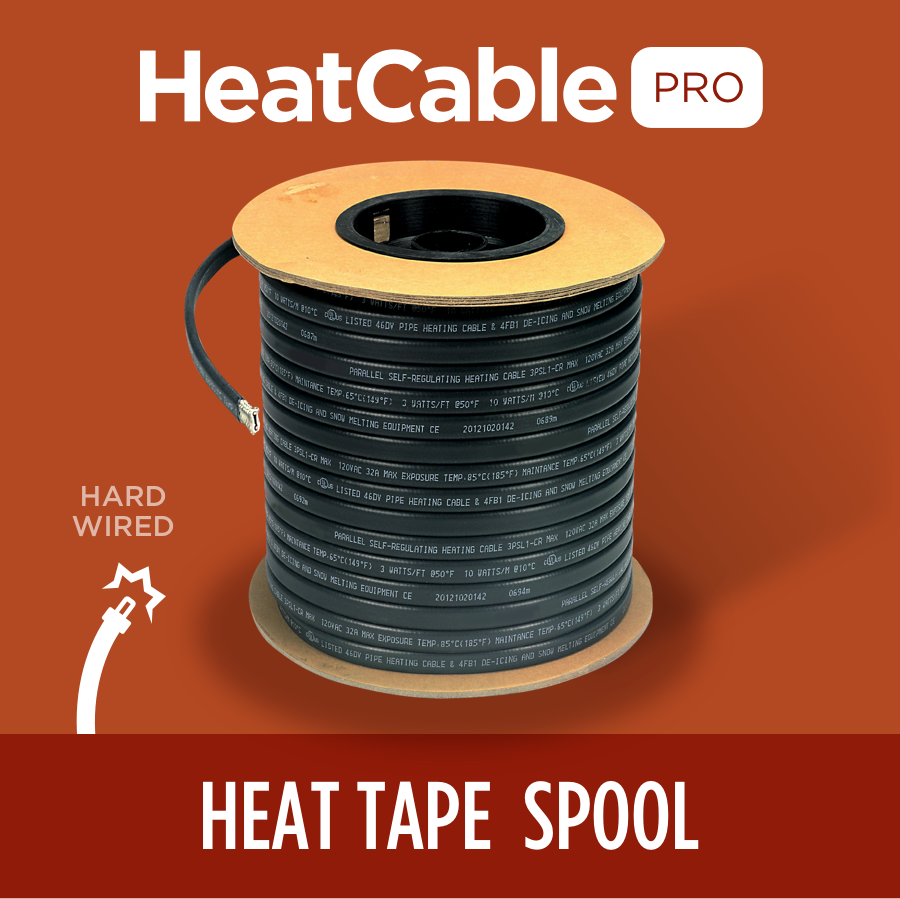
The HCK-215 Self-Regulating Heat Cable Hardwire Connection Kit allows you to directly hardwire heat cable into a junction box for spooled cable installations. It works with both 120v and 240v heat tape. Roof and gutter de-icing applications can sometimes be tricky to calculate in terms of buying the right cable length. Connecting your heat cable directly to a junction box allows you to pull the exact amount of cable off the spools and finish the system quickly inside a junction box. Homeowners typically go the pre-terminated cable route while contractors gravitate towards hard-wired systems. The actual installation of the hardwire connection kit takes about 5-10 minutes depending on experience and requires basic hand tools. Easy p
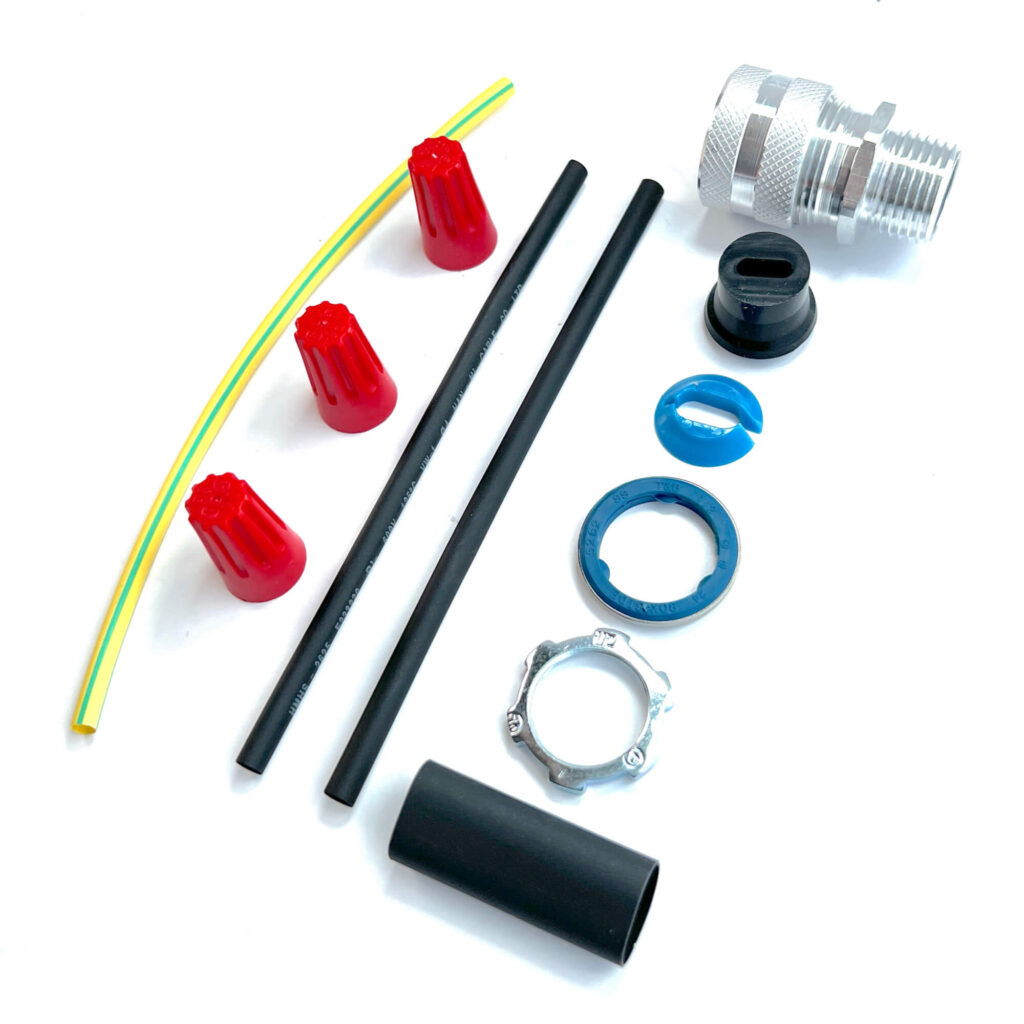
easy.
The IDP-113 Nail-On Heat Tape Roof Clip is still commonly used in a variety of markets around the country. Tried and true, the Nail-On clip provide instant, permanent connection point for heat cable systems. It can also be glued into position using SureBond SB 190 adhesive. In fact, many of our profession installers always have a box on hand for handling random situations where the larger DDK Jumbo Glue-Down clips are too big. Unlike cheap, off-shore clips, our Nail-One clips are made of anodized AL5052 Aluminum so they are far stronger over the long run.