Trustindex verifies that the original source of the review is Google.

 Trustindex verifies that the original source of the review is Google.
 Trustindex verifies that the original source of the review is Google.
 Trustindex verifies that the original source of the review is Google.
 Trustindex verifies that the original source of the review is Google.
 Trustindex verifies that the original source of the review is Google.
 Trustindex verifies that the original source of the review is Google.
 Trustindex verifies that the original source of the review is Google.
 Trustindex verifies that the original source of the review is Google.
 Trustindex verifies that the original source of the review is Google.


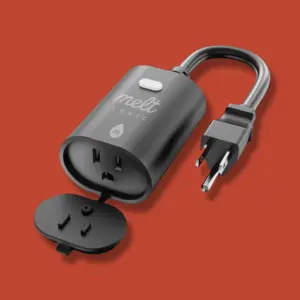
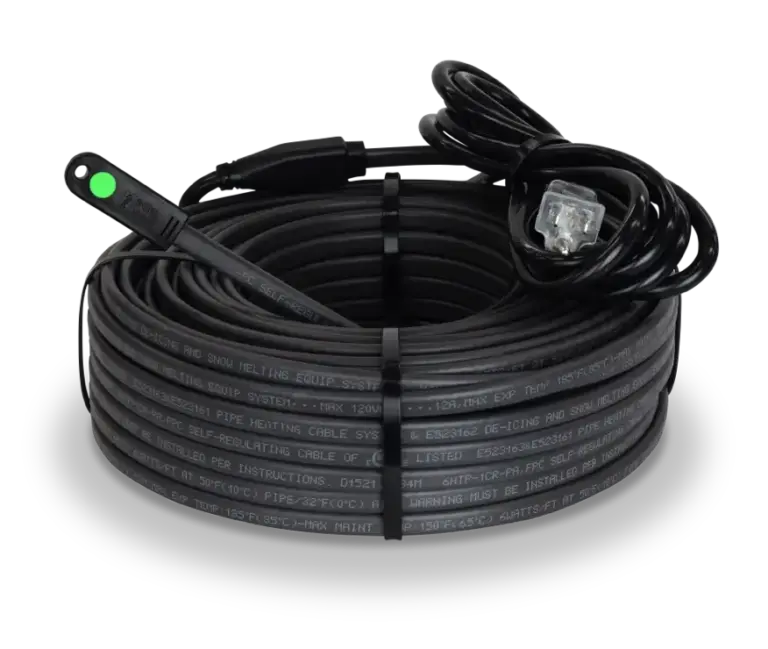
The cable can be exposed to wetness but the thermostat must stay dry to function properly. Use Pipe Freeze PRO for pipe freeze prevention applications only.
Once it turns on, the self-regulating aspect takes over and directs heat to the area(s) of the cable that are in contact with the cold. The thermostat should be positioned outside of the insulating layer so it can effectively read the temperature of the air.
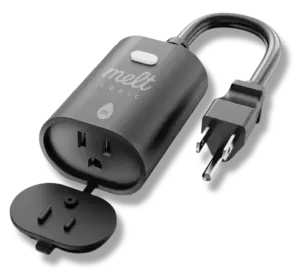
Self-Regulating Heat Tape will draw variable Power depending on the ambient temperature. It draws more power when temperatures are cold and less power when temperatures are warmer. However when the self-regulating cable is plugged in, it is always working, even if only slightly drawing power in warm temperatures. Adding the temperature-controlled switch like ThermaCord to plug-in heat tape or a Thermostatic Controller with Sensor to field assembled cable, will cut the supply of power to your Heat tape when it is not needed.
This will save you energy Costs.
Heat Tape purchased in big-box stores is most often constant wattage heat tape. “Constant Wattage” means: it’s always on. It is always drawing full power and is costing you peak energy expenses, which –over the length of a season can add up huge. Thought you were saving money on that heat tape you got at that home improvement store? Guess again.
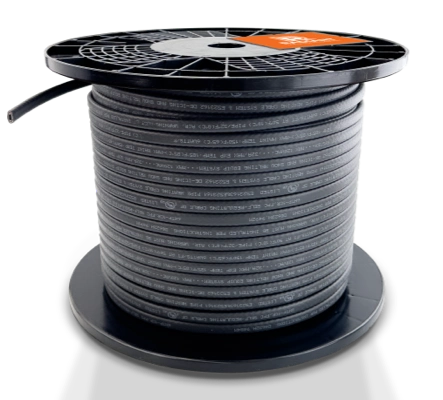
Radiant Solutions’ Heat Tape PRO™ heating cable is Self-Regulating. This means, as the temperature gets colder, the cable creates more heat by drawing more power and when it gets warmer it creates less heat by drawing less power. This allows you to consume only the energy you need to help protect your home from damage caused by the ice and cold.
The core of our ice dam heat tape is comprised of two bus wires encased in a material that is infused with carbon. As ambient temperatures decrease, the core material shrinks pulling the bus wires closer to each other, creating more electrical pathways through the carbon which makes the cables heat up. When ambient temperatures get warmer, the inner core expands and the cable demands less energy and creates less heat.
No, not really. Because any control or switch is still going to tell your constant wattage cable to be either off or on at 100% power. It is very binary. Conversely, Self-regulating Heat Tape will output variable temperatures based on the external, ambient temperature. So when it’s 31ºF or 10ºF constant wattage heat tape will always be on full heat, where self-regulating heat tape will only use just enough power to be at the temperature you need to prevent ice dams on the roof or frozen pipes around your property.
Among other things, constant wattage heat cable cannot be overlapped without creating risk of over heating or shorting out. It cannot be used under 15°F, it cannot be used on wood roofs, rubber roofs, metal roofs, or anything other than asphalt shingle roofs. You must clean combustibles such as leaves away from constant wattage cable throughout the operating season. The warranty on most constant wattage heat cable systems is no more than two years. Lastly, unlike self-regulating heat cable systems, constant wattage heat cables cannot be repaired in the field if they are damaged. One knick in the jacketing, and the cable is done.
Because our heat cable can be overlapped, there is no specific way to wrap valves. A simple loop of cable around the body of the valve will be enough. A couple things to remember. First, try to keep the cable in contact with the valve so the heat transfers effectively from the cable to the valve. Next, do your best to insulate the valve to protect it from the cold. This often means getting a little creative with the same insulation you use for the pipe. You can use a scissors to cut the insulation into one or more shapes and then secure those shapes to the valve with tape (duct tape works well). Speaking of tape, remember to use our fiberglass installation tape to secure the cable to the pipe.
Like Heat Tape Pro, Pipe Freeze Pro should not be installed on pipes that regularly heat up to over 150ºF as this may cause longterm damage to the heat cable. It therefore depends on how hot you have your water heater set to. On average, water heaters are set to about 140ºF to prevent scalding.
PipeFreezePRO comes with one or more 30ft rolls of high-quality fiberglass tape, but you can use any tape with a temperature rating of 150º F and above. Self-adhesive aluminum foil tape can be used but avoid standard tapes, including electrical tape and duct tape because they lose their adhesion when exposed to heat. Remember, it’s imperative to cover the pipe/heat tape assembly with pipe insulation (1/2″ minimum thickness). Think four easy steps: 1) cable on pipe, 2) tape on cable, 3) insulation on pipe/cable and 4) tape on insulation.
Our cables operate at between 40ºF to 90ºF so they will not melt or damage any surface or material they come into contact with. Except chocolate. Our cables will thoroughly melt chocolate.